



 Home
HomeHow to Create a Custom Pop-Up Book for Children
 Nov 24,2025

 SESE
SESE
How to Create a Custom Pop-Up Book for Children
1. Introduction: Why Choose a Custom Pop-Up Book?
Pop-up books are more than just stories—they’re an experience. With intricate designs that leap off the page, these books captivate children’s imaginations and engage them in a way that traditional books cannot. Whether for educational purposes, storytelling, or just pure fun, a custom pop-up book offers a unique way to bring stories to life. By choosing a custom pop-up book, you can ensure the design, theme, and pop-up elements are specifically tailored to your vision. This level of personalization enhances the magic of the book and makes it a keepsake that children will treasure for years to come.
2. Understanding Pop-Up Book
A pop-up book is a type of children's book that features three-dimensional elements that spring up when the pages are opened. These interactive elements can include pop-ups, pull-tabs, flaps, and wheels, adding a dynamic layer to the reading experience. Pop-up books can vary in complexity, from simple designs to elaborate scenes that are designed to captivate and surprise.
The interactive nature of pop-up books helps foster children's cognitive development by encouraging them to engage with the narrative in a tactile way. It also adds an extra layer of creativity to the storytelling process, making the characters and settings feel more alive.
3. Steps to Create a Custom Pop-Up Book
Step 1: Conceptualizing the Story
Before diving into design, the most important aspect of any book is the story. A strong, engaging narrative forms the foundation for your custom pop-up book. Whether you’re writing a fairy tale, an educational story, or a simple narrative, ensure the storyline is suitable for a pop-up format. Pop-up elements should complement and enhance the story, rather than distract from it. A well-structured plot will give the pop-up elements a natural flow, allowing the story to unfold in exciting ways.
Step 2: Working with Pop-Up Mechanics
Pop-up books are built around mechanisms that make the elements pop up or move. Understanding different pop-up techniques is key to creating an effective book. Common mechanisms include:
|
|
|
|
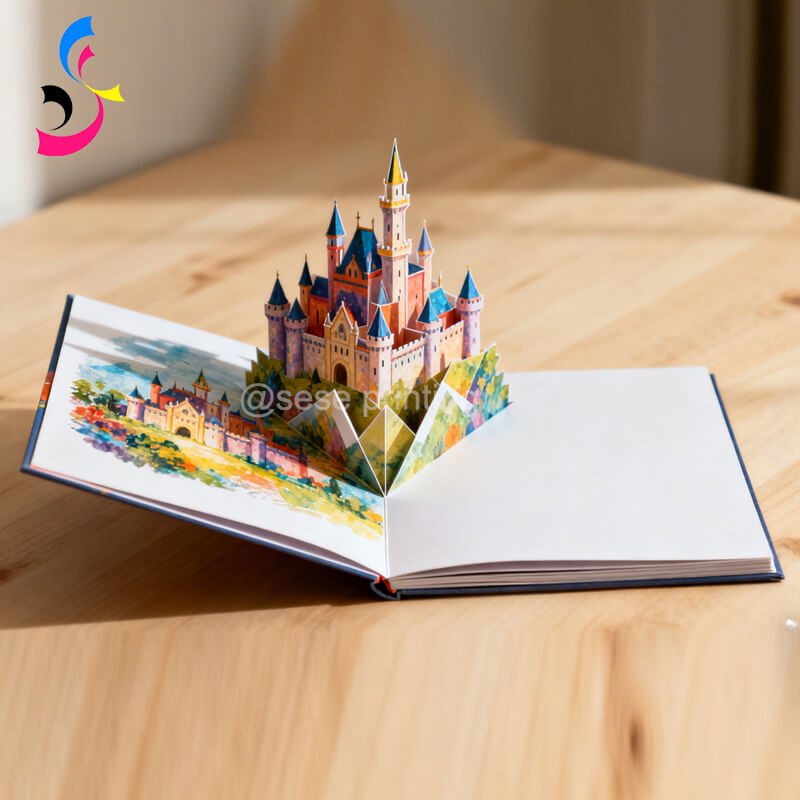
V-folds |
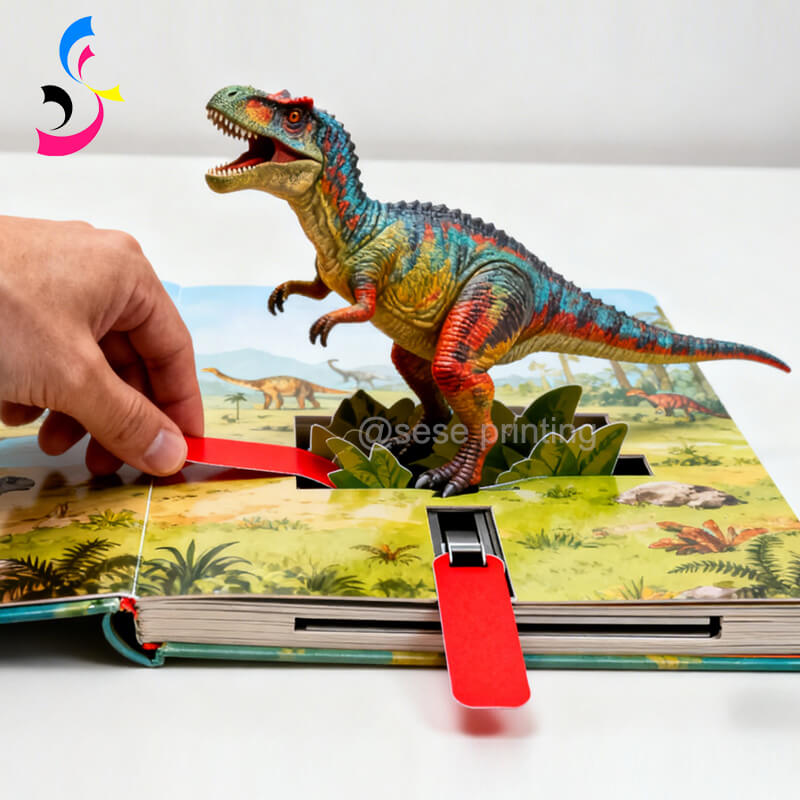
Pull-tabs and sliders |
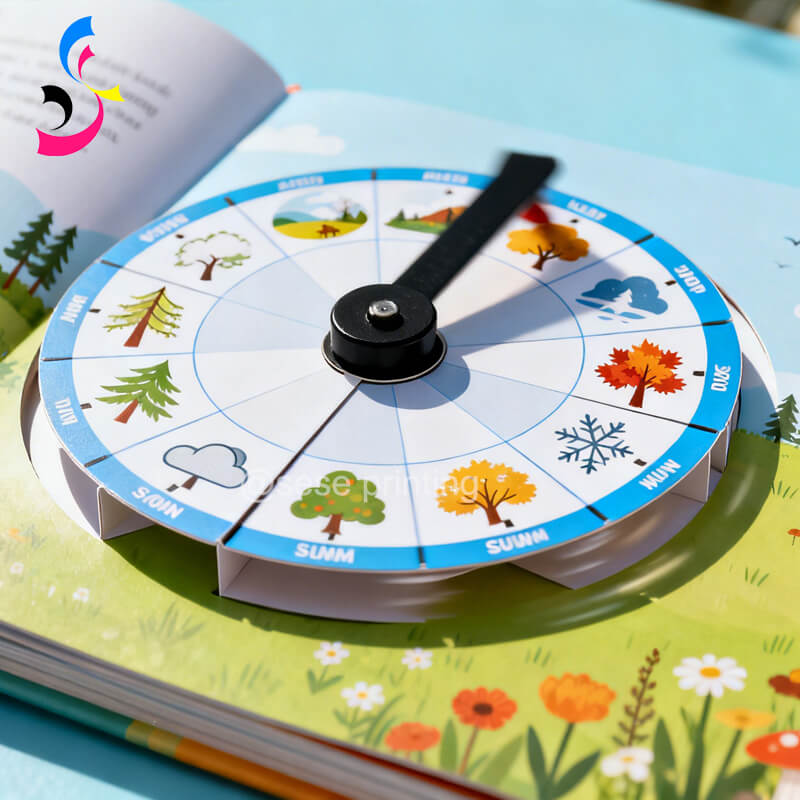
Rotating wheels |
-
V-folds: These are the most common pop-up design where an image folds and springs open when the page is turned.
-
Pull-tabs and sliders: These allow readers to interact by pulling a tab or sliding a piece to reveal new elements or movements.
-
Rotating wheels: These can make elements on the page spin, adding more interactivity.
Work with your designer to select the right mechanisms based on the story and the complexity of the pop-up elements.
Step 3: Designing the Artwork
The design process for a pop-up book is unlike any other type of book. Not only do you need to design the static illustrations, but you also need to consider how they will fold, pop, or move. Artwork should be vibrant, clear, and easy for young readers to understand. Custom printing allows for high-quality, full-color designs that bring your pop-up illustrations to life. The artwork must also be designed with the pop-up mechanisms in mind, ensuring that the images and the mechanics work together harmoniously.
Step 4: Choose Your Custom Printing Specifications
The choices you make here directly impact quality, safety, and durability.
Paper Type and Weight
-
The type of paper you choose will play a significant role in how well the pop-up elements function. Since pop-up books involve intricate folds, cuts, and mechanisms, it’s important to use paper that is durable and sturdy enough to handle the movements without tearing or warping.
-
Cardstock vs. Paperweight: Cardstock is commonly used for the pop-up components because it is thicker and stronger than standard paper. For the pages themselves, a medium-weight paper (around 150-250 gsm) works well, while the pop-up components may require a heavier paper (up to 350 gsm or more).
-
Coated vs. Uncoated Paper: Coated paper (such as gloss or matte finish) provides a smooth, vibrant print surface, making colors pop. This is ideal for the pages of your pop-up book. Uncoated paper gives a more textured, natural feel, but may not hold up as well with intricate pop-up mechanisms.
Print Quality and Color
-
Custom printing ensures that every detail in your pop-up book is brought to life with precision. High-quality digital printing allows for vibrant colors and sharp details, which are essential for pop-up illustrations.
-
Full-Color Printing: Use full-color (CMYK) printing to ensure bright, dynamic illustrations that will grab a child’s attention. This is especially important for pop-up books, where the artwork is often the main focus.
-
Pantone Spot Colors: If you want specific colors that stand out, such as metallics or neon hues, you may choose Pantone spot colors. These are particularly useful for creating visual accents in the pop-up elements, such as gold foil or special highlights.
Paper Coatings and Finishes
-
Gloss Finish: A gloss finish will make colors appear more vivid and give the pages a shiny, reflective surface. This finish can enhance illustrations and make the pop-up elements stand out.
-
Matte Finish: A matte finish provides a smooth, non-reflective surface. It’s ideal for a more refined, elegant look and works well with delicate or pastel-colored designs.
-
Soft Touch Finish: This type of coating gives a luxurious feel and works especially well for the cover of the book, adding an extra layer of tactile enjoyment for the reader.
-
UV Coating: Ultraviolet (UV) coating offers a glossy, durable surface that adds protection to the pages, helping to keep the book looking pristine for longer, especially when it’s handled frequently.
Binding Style
-
For pop-up books, binding is a key consideration because the book must open and close smoothly while handling the intricate pop-up elements. The binding needs to be flexible and sturdy to hold the pop-up components securely.
-
Lay-Flat Binding: This style of binding allows the book to lay completely flat when open, which is essential for pop-up books. It ensures that the pop-up elements are fully revealed and prevents damage to the paper from bending or creasing.
-
Smyth-Sewn Binding: This is a durable binding method that allows for added flexibility, making it a great option for pop-up books. It ensures that the pages won’t easily fall out and that the book opens and closes without compromising the integrity of the pop-up elements.
Size and Shape of the Book
-
Standard Sizes: A common size for children’s pop-up books is 8” x 8” or 10” x 10”, providing enough room for intricate pop-up elements and large illustrations.
-
Custom Sizes: If you have a unique concept in mind, you can go for a custom size to make your book stand out. Just be mindful that larger sizes may require more durable paper and binding options to ensure the book can handle the weight of the pop-up mechanisms.
Special Finishing Touches
-
Foil Stamping: Adding metallic foil (gold, silver, etc.) to certain elements of the book can enhance the visual appeal, especially for titles, borders, or important illustrations.
-
Embossing/Debossing: Embossing (raising the design) or debossing (pressing the design into the paper) adds texture to the book, creating a tactile experience for children as they interact with it.
-
Spot UV Coating: This selective coating highlights specific areas of the design (such as the title or illustrations) with a glossy, raised texture, making those elements stand out from the rest of the page.
Step 5: Prototyping the Pop-Up Elements
Once you’ve finalized the design and chosen the printing specifications, it’s time to create a prototype. Prototyping is an essential step in pop-up book creation. It allows you to test the mechanics, check the durability of the paper, and ensure that all pop-up elements work smoothly. Working with a skilled team of designers and printers during this phase will help you fine-tune the design and make any necessary adjustments before moving into full production.
Step 6: Final Production and Fulfillment
After prototyping and finalizing the design, it’s time for the final production. This is where your custom pop-up book comes to life. Working with an experienced printer is essential at this stage to ensure that all the intricate details of the pop-up book are accurately produced. Once printed, the books are assembled, and the final touches (such as binding and finishing) are applied. Depending on the scale of your project, fulfillment and distribution can be handled by the printing company or another partner.
4. Choosing the Right Printer for Your Custom Pop-Up Book
Not all printers are created equal, especially when it comes to the intricate art of pop-up books. This is where the expertise of your manufacturing partner makes all the difference.
For a project that demands precision, quality, and a deep understanding of paper engineering, Sese Printing is the ideal partner. We specialize in high-end custom children's book printing, with a dedicated team experienced in bringing complex pop-up concepts to life.
Why choose Sese Printing for your project?
Expertise in Paper Engineering: We don't just print; we collaborate with you on mechanics to ensure your book is both beautiful and functional.
Uncompromising Quality Control: From paper selection to final assembly, we maintain rigorous standards to ensure every book is perfect and safe for children.
End-to-End Service: We guide you from concept to fulfillment, offering design support, prototyping, and global shipping solutions.
Commitment to Your Vision: We understand that your custom pop-up book is a special project, and we are dedicated to making your vision a stunning reality.
Let Sese Printing be the partner that helps you create magic. Contact us today for a free consultation and quote.
5. Benefits of Custom Pop-Up Books
Creating a custom pop-up book offers numerous benefits:
Personalization: Custom pop-up books are perfect for creating personalized stories, whether for special occasions like birthdays, holidays, or educational purposes.
Engagement: Pop-up books offer a unique, interactive experience that keeps children engaged and encourages them to participate in the story.
Creativity: The pop-up format encourages creativity in both storytelling and design. You can incorporate a wide variety of artistic techniques to make your book visually stunning.
Educational Value: Pop-up books can be used as educational tools, helping children understand concepts like shapes, colors, or movement in a fun, hands-on way.
Perfect for Brands and Authors: It’s a powerful marketing tool or a premium product that stands out in a crowded market.
6. Conclusion
Creating a custom pop-up book for children is an exciting and rewarding project that combines storytelling with interactive design. With the right planning, a strong narrative, and the expertise of custom printers, you can bring your ideas to life in a way that will captivate and delight young readers. The level of creativity and personalization that comes with a custom pop-up book ensures that each book is a unique treasure that children will enjoy for years to come.
 Frequently Asked Questions (FAQs) about Special Edition Books Printing
 You May Also Like


 Tel
Tel
 Email
Email
 Address
702 No. 21 Huizhong Road, Shiqiao St, Panyu District. Guangzhou city, Guangdong Province. China

Joy
 Whatsapp