



 Home
HomeA Step-by-Step Guide to Calculating Your Books Spine Width
 Feb 25,2026

 SESE
SESE
A Step-by-Step Guide to Calculating Your Book's Spine Width
1. Introduction
When it comes to custom book printing, getting the spine width right is crucial. The spine width not only ensures that your book looks and feels well-proportioned but also affects how the book will be bound and presented. Whether you’re printing a standard hardcover, a special edition, or a custom paperback, understanding how to calculate the spine width accurately is essential for achieving the best results. This guide will walk you through the process of determining the perfect spine width for your book and highlight key considerations for custom printing.
2. What Is Spine Width and Why Does It Matter?
The spine width is the thickness of your book’s spine, which is determined by the number of pages and the paper type used. It plays a significant role in the overall appearance and durability of the book. If the spine is too narrow or too wide, it can negatively impact the binding, design, and even the longevity of the book.
In custom printing, especially for special editions or hardcover books, spine width becomes even more important since the added elements like foil stamping, embossing, and sprayed edges can impact the book's final appearance. An accurately calculated spine ensures that these features fit seamlessly.
Why does getting this calculation right matter so much?
-
Visual Impact: The spine is your book's calling card on a crowded shelf. A perfectly centered title signals professionalism and care.
-
Structural Integrity: An incorrectly calculated spine can cause the cover to warp, crack, or detach over time.
-
Design Continuity: For series or multi-volume works, consistent spine widths create a cohesive and elegant appearance.
-
Reader Experience: A properly proportioned spine ensures the book opens comfortably and lies flat when read.
3. The Basic Formula for Spine Width
At its simplest, the formula for calculating spine width is:
Spine Width = (Number of Pages ÷ 2) × Paper Thickness
However, this basic formula is just the starting point. Let's break down each component:
Number of Pages: This means every single page in your book, including front matter (title page, copyright, table of contents), body text, back matter (appendices, indexes), and any intentionally included blank pages. Remember: a page is one side of a sheet (not including the cover).
Paper Thickness: This is typically measured in millimeters (mm) or inches and varies significantly based on paper type, weight, and finish.
For example, if you have a 300-page book using 80gsm paper, the spine width would be calculated as:
Spine Width = (300 ÷ 2) × 0.1mm =15mm
4. Key Factors That Affect Your Calculation
Paper Stock: Different paper stocks come with varying thicknesses. High-end stocks, such as textured papers or glossy finishes, will take up more space, resulting in a thicker spine. If you're working with premium materials like coated paper or art paper, the spine width calculation will be slightly larger.
Binding Type: The type of binding you choose (e.g., case binding, perfect binding, or stitched binding) can affect the book’s spine, even though the effect may not be immediately obvious.
Cover Materials: Custom cover materials like embossing, foil stamping, or metallic finishes can add a slight increase to the spine width due to the additional layer of material.
Endpapers and Special Features: For hardcover books with custom endpapers, dust jackets, ribbon markers, or special coatings, these additions can affect the book’s thickness, even though they are not considered in the basic spine width calculation.
5. Calculating for Different Binding Types
Each binding method requires a slightly different approach to spine calculation:
Perfect Bound (Paperback)
Formula: (Total Pages × Paper Thickness) + Cover Wrap Allowance
In perfect binding, pages are glued directly into a soft cover. The cover wraps around the spine and attaches to the front and back. A small allowance (typically 1-2mm) ensures the cover fits without stress and the glue adheres properly.
Case Bound (Hardcover)
Formula: (Total Pages × Paper Thickness) + (2 × Board Thickness) + Joint Allowance
For hardcover books, the printed book block is attached to a separate hard case. The formula must account for:
The thickness of the front and back boards
The "joint" or gap that allows the cover to open freely
The spine stiffener (if used)
Saddle-Stitched
Formula: (Total Pages × Paper Thickness) + Staple Allowance
For booklets and thin publications stapled through the fold, the spine is essentially the folded edge. The calculation is simpler but still requires precision for cover design.
Smyth-Sewn
When signatures are sewn together, the thread adds minimal but measurable thickness. For high-end custom work, Sese Printing accounts for this in our calculations, ensuring the final spine matches the design exactly.
6. Common Calculation Mistakes to Avoid
When calculating the spine width, there are a few common mistakes to watch out for:
Not accounting for paper type: Using a standard paper thickness (e.g., 80gsm) for premium or custom paper stocks can lead to inaccurate calculations.
Ignoring special features: Embellishments like foiling, spot UV, and patterned edges can slightly add to the spine width but may be overlooked in some calculations.
Underestimating the thickness of hardcover books: If you’re printing a hardcover with multiple custom features, make sure to add the extra thickness that the cover material brings.
7. How Sese Printing Ensures Precision
At Sese Printing, precision isn't just a goal—it's our standard. Here's how we ensure your spine width is calculated correctly:
Pre-Production Consultation
Our experts review your manuscript specifications, discuss your paper preferences, and provide detailed recommendations based on your binding choice and budget.
Material Testing
We maintain exact specifications for every paper stock we carry, including actual thickness measurements under production conditions. We can provide samples for your own testing and approval.
Advanced Calculation Tools
Our pre-press team uses specialized software that accounts for:
Paper compressibility during binding
Environmental factors
Binding method-specific variables
Cover material properties
Digital File Verification
Before printing, we verify that your cover artwork matches our calculated spine width, ensuring your title and design elements will be perfectly centered.
Production Monitoring
Throughout printing, we continuously monitor:
Paper consistency within mill tolerances
Binding compression
Environmental conditions in our facility
8. Testing Your Calculation with a Mock-Up
Before finalizing your book, it’s always a good idea to test your spine width calculation by creating a mock-up or a book prototype. This helps ensure that everything fits together properly, from the pages to the cover, including any additional features like dust jackets or embellishments.
Testing a mock-up can give you a clearer visual of how the spine will appear in real life and help you make any necessary adjustments before proceeding to full production.
9. Adjusting for Special Features
|
|
|
|
|
|
Dust Jackets |
French Flaps |
Foil Embossing |
Ribbon Bookmark |
Sprayed Edges |

Dust Jackets
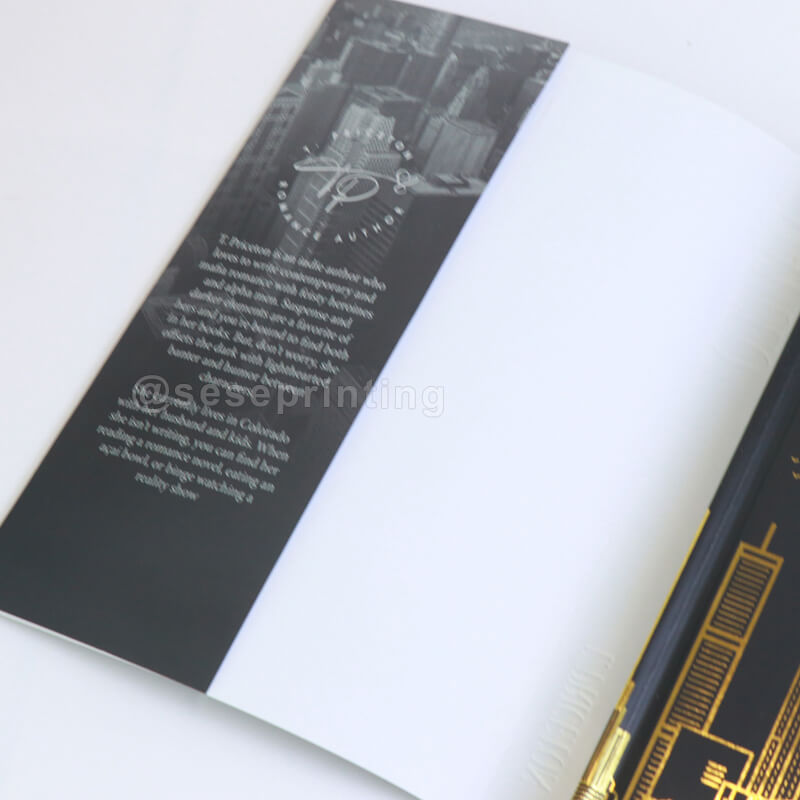
When your hardcover book includes a dust jacket, the spine width must account for the jacket's thickness as it wraps around the actual cover. The jacket spine should be slightly wider than the book's spine to accommodate this wrap.
French Flaps
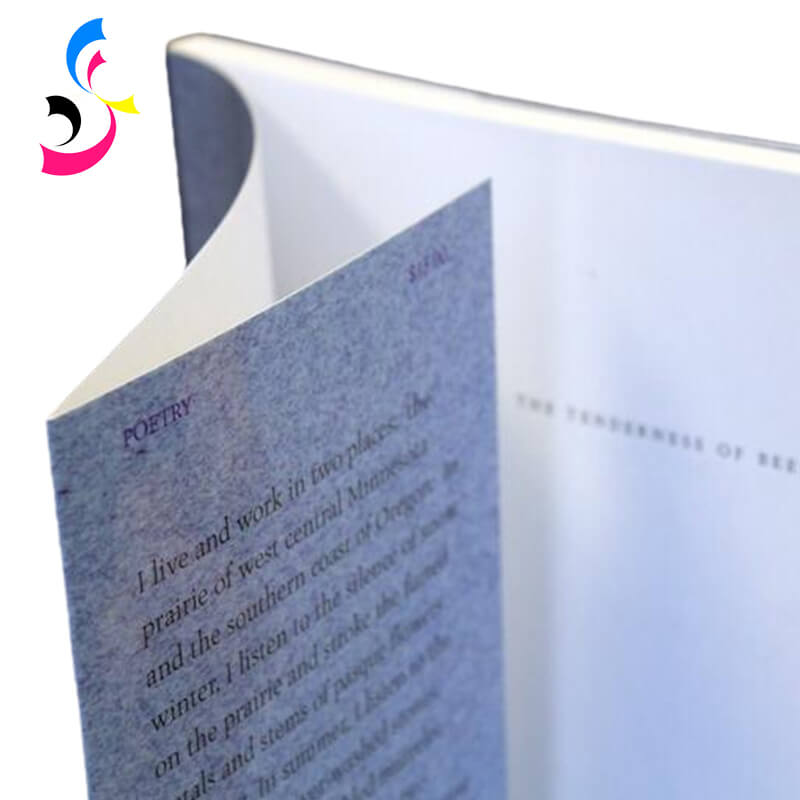
These elegant folded extensions on paperback covers add minimal width but require precise placement of the spine crease. The spine calculation remains the same, but cover design must account for the flaps.
Foil Stamping and Embossing
While these decorative elements don't affect spine width, they do require precise placement on the calculated spine area. Sese Printing's registration ensures your foil stamping lands exactly where it should.
Ribbon Markers
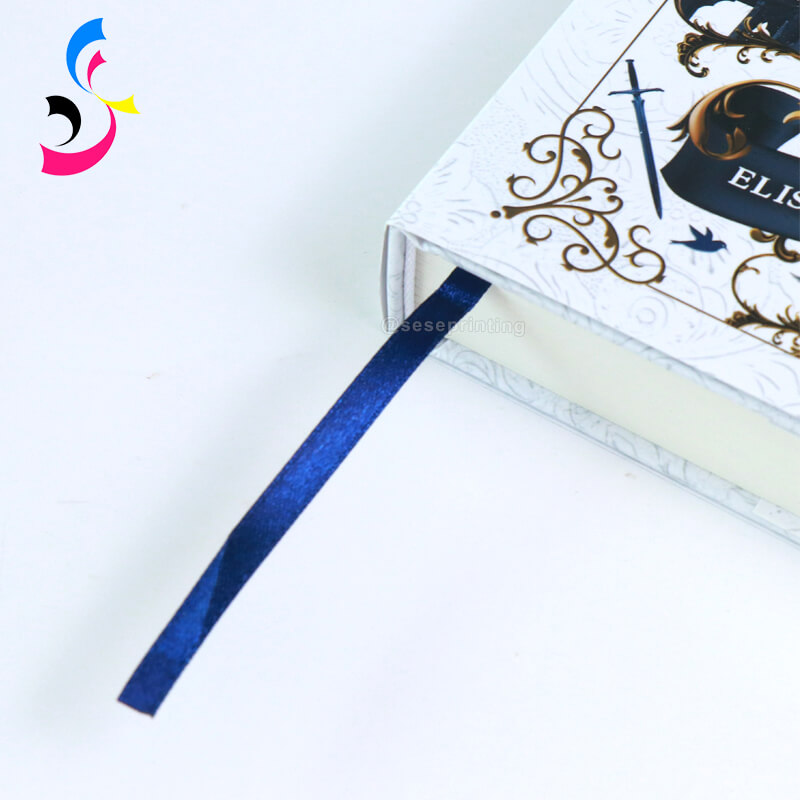
For books with sewn-in ribbon markers, ensure the ribbon doesn't add bulk that affects spine calculation. Our binders position markers carefully to avoid interference.
Sprayed Edges
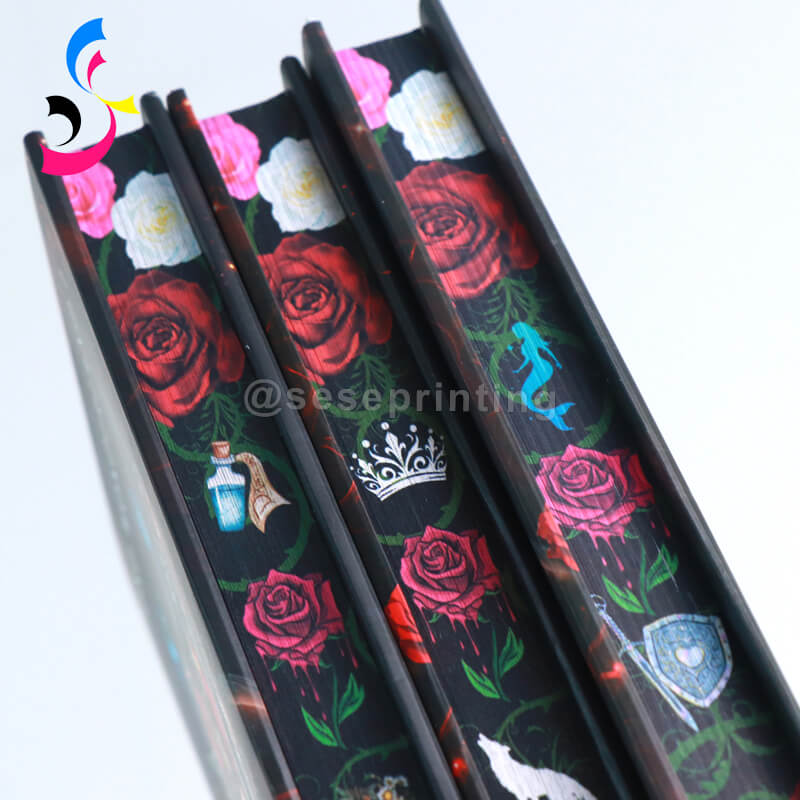
This decorative technique doesn't affect spine width, but it does require the book block to be precisely trimmed before application—another area where Sese Printing's precision matters.
10. Conclusion
Calculating your book's spine width correctly is one of those details that separates amateur efforts from professional publications. It requires understanding not just a simple formula, but the many variables that influence the final measurement—from paper characteristics to binding methods to environmental factors.
At Sese Printing, we understand that your book represents your vision, your creativity, and your hard work. That's why we approach every detail with the care and precision it deserves. From initial consultation through final production, our team is dedicated to ensuring that every element—including your perfectly calculated spine—meets the highest standards of quality.
Whether you're producing a simple paperback, a luxurious hardcover with foil stamping and endpapers, or a multi-volume series requiring consistent spines across all books, Sese Printing has the expertise and technology to bring your vision to life.
Contact us today to discuss your next project. Let us show you how precision printing can transform your book from a manuscript into a masterpiece.
 Understanding Our Customized Collaboration Process: A Step-by-Step Guide
 You May Also Like


 Tel
Tel
 Email
Email
 Address
702 No. 21 Huizhong Road, Shiqiao St, Panyu District. Guangzhou city, Guangdong Province. China

Joy
 Whatsapp