



 Home
HomeBook Box Packaging Ideas for Special Edition Books
 Oct 12,2026

 SESE
SESE
Book Box Packaging Ideas for Special Edition Books
Special edition books are more than publications. They are collectible items that reflect an author's creativity, a publisher's vision, and a reader's appreciation for exceptional design. From limited-edition fantasy novels to premium hardcover collections, the right book box packaging can elevate the entire presentation and make a book feel even more special.
Custom book box packaging serves several purposes. It helps protect books during storage and transportation, creates a memorable unboxing experience, and reinforces the visual identity of a special edition. When combined with custom book printing, premium materials, and decorative finishing techniques, a thoughtfully designed box can turn an ordinary book into a cohesive, collectible product.
For independent authors, publishers, book brands, and retailers, custom packaging also provides an opportunity to differentiate products in a competitive market. Matching the box design with the book cover, endpapers, sprayed edges, and other decorative details creates a consistent appearance that appeals to collectors and dedicated readers.
At SESE Printing, we understand that every special edition project has its own design requirements. Whether you are planning a single-volume collector's edition, a multi-book series, or a premium gift set, exploring different book box packaging ideas is the first step toward developing a solution that fits your vision.
This guide explores seven packaging structures, genre-specific design strategies, cost factors, and everything you need to commission packaging that does justice to your book.
1. Common Book Box Packaging Ideas for Special Edition Books
Choosing the right packaging style is essential for creating a distinctive presentation for special edition books. From luxury rigid boxes to custom printed slipcases, different packaging structures offer unique opportunities to combine protection, visual appeal, and personalized printing.
For authors, publishers, and book brands, custom book box packaging can be tailored to match the book's artwork, genre, format, and finishing details. Here are seven popular packaging ideas to consider for your next special edition book project.
Luxury Rigid Book Boxes
Custom Printed Slipcases
Book Gift Boxes with Custom Inserts
Magnetic Closure Book Boxes
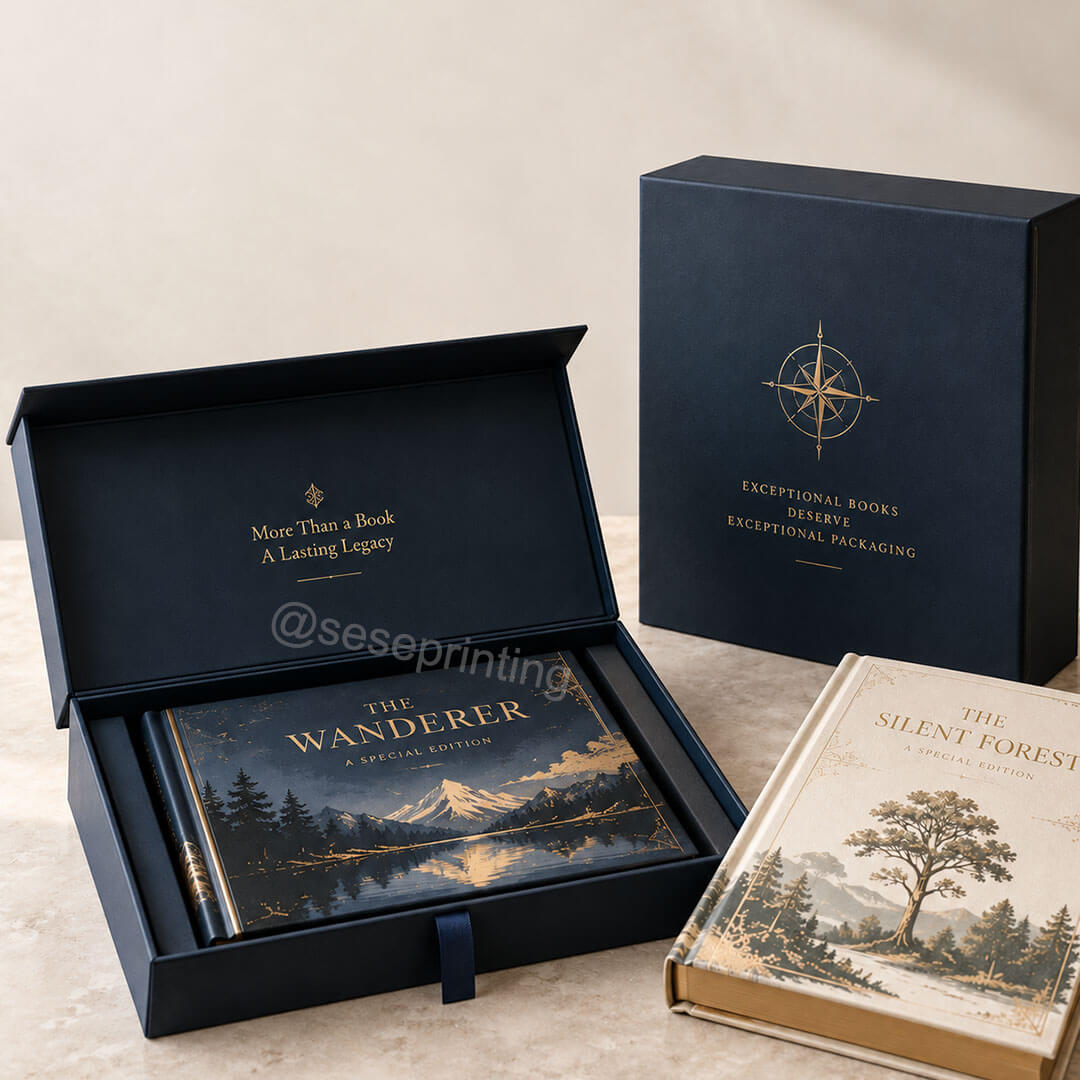
2.1 Luxury Rigid Book Boxes
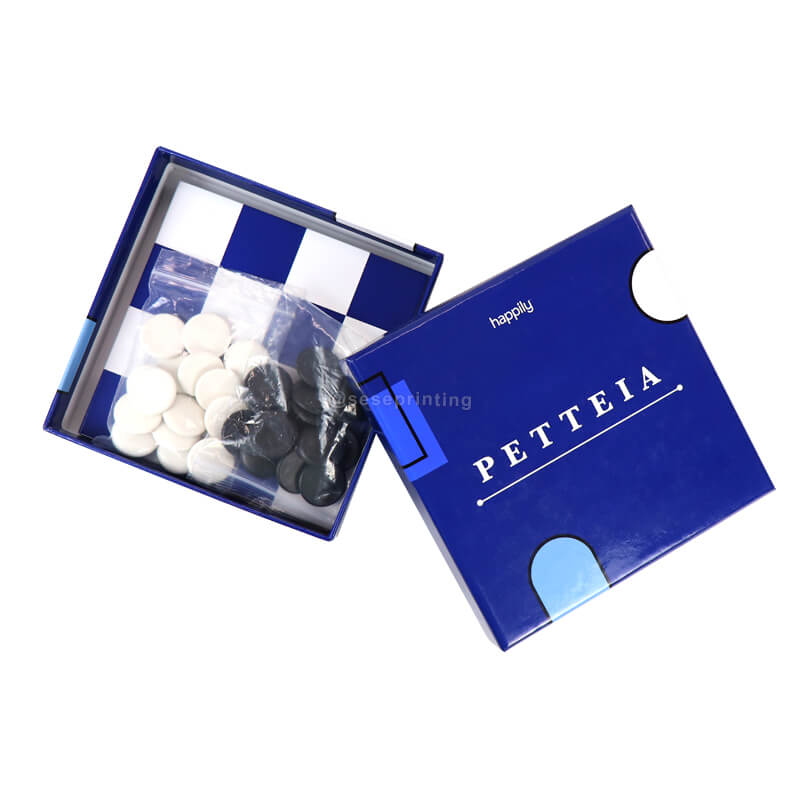
Rigid book boxes are a popular choice for premium editions because of their sturdy construction and refined appearance. They can be customized with printed artwork, foil stamping, embossing, and specialty wrapping paper to create a distinctive presentation.
Best for: Luxury hardcover novels, limited editions, and collector's books.
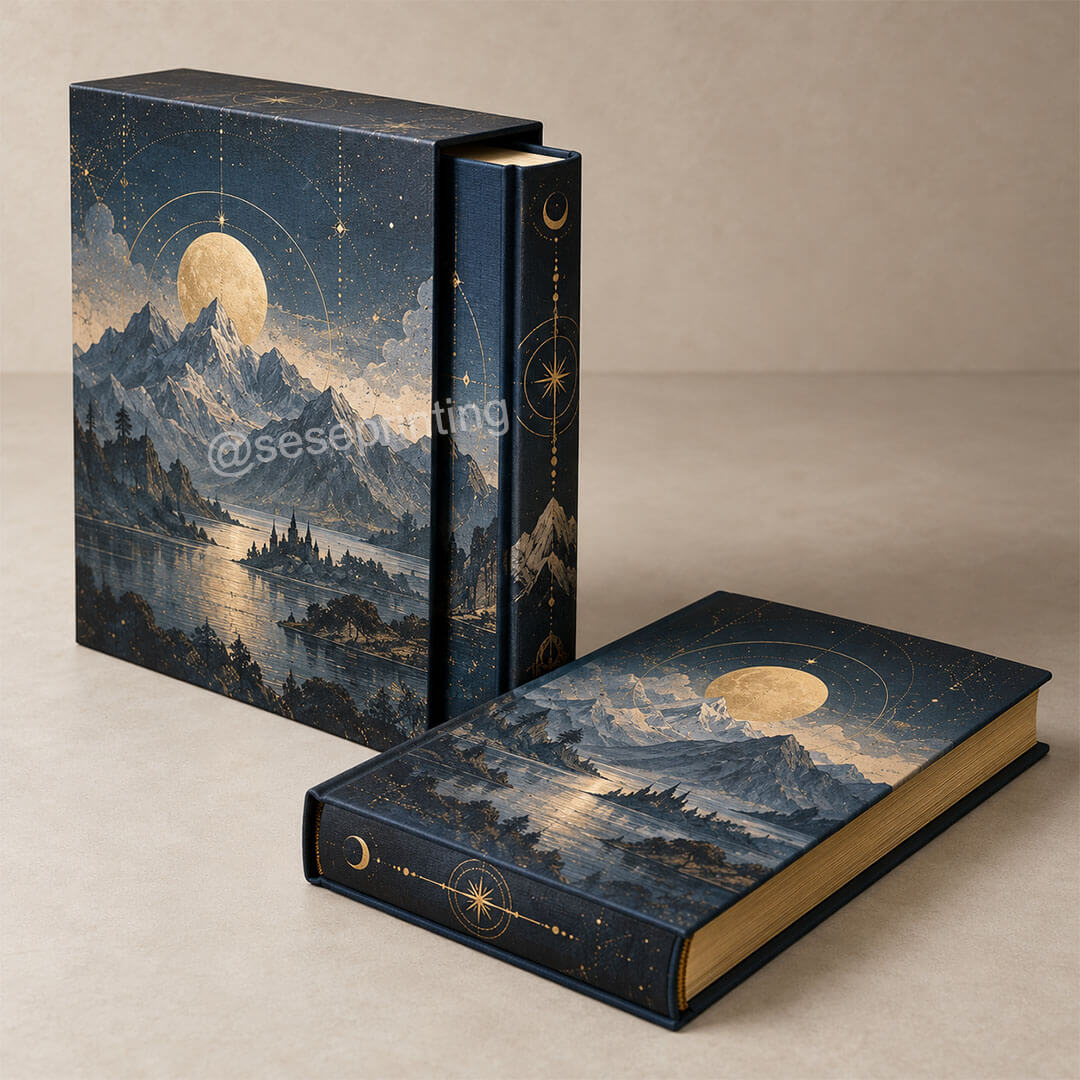
2.2 Custom Printed Slipcases
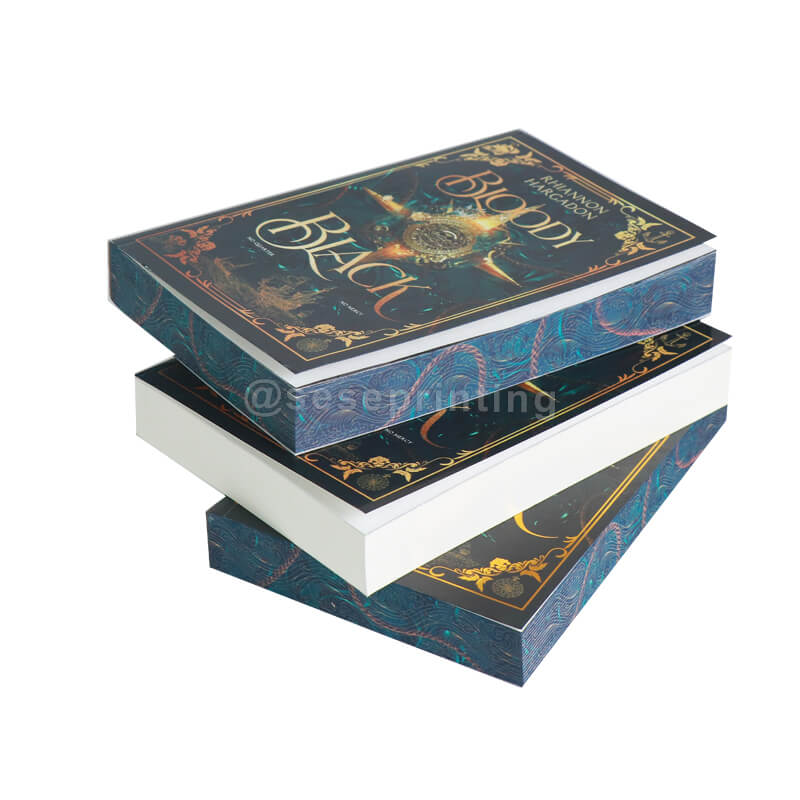
Slipcases provide a practical way to package and present multiple books as a coordinated collection. With custom printing, the slipcase can feature continuous illustrations, matching colors, decorative patterns, or foil-stamped series titles that complement the individual book covers.
Best for: Boxed book sets, fantasy trilogies, romance series, and omnibus editions.
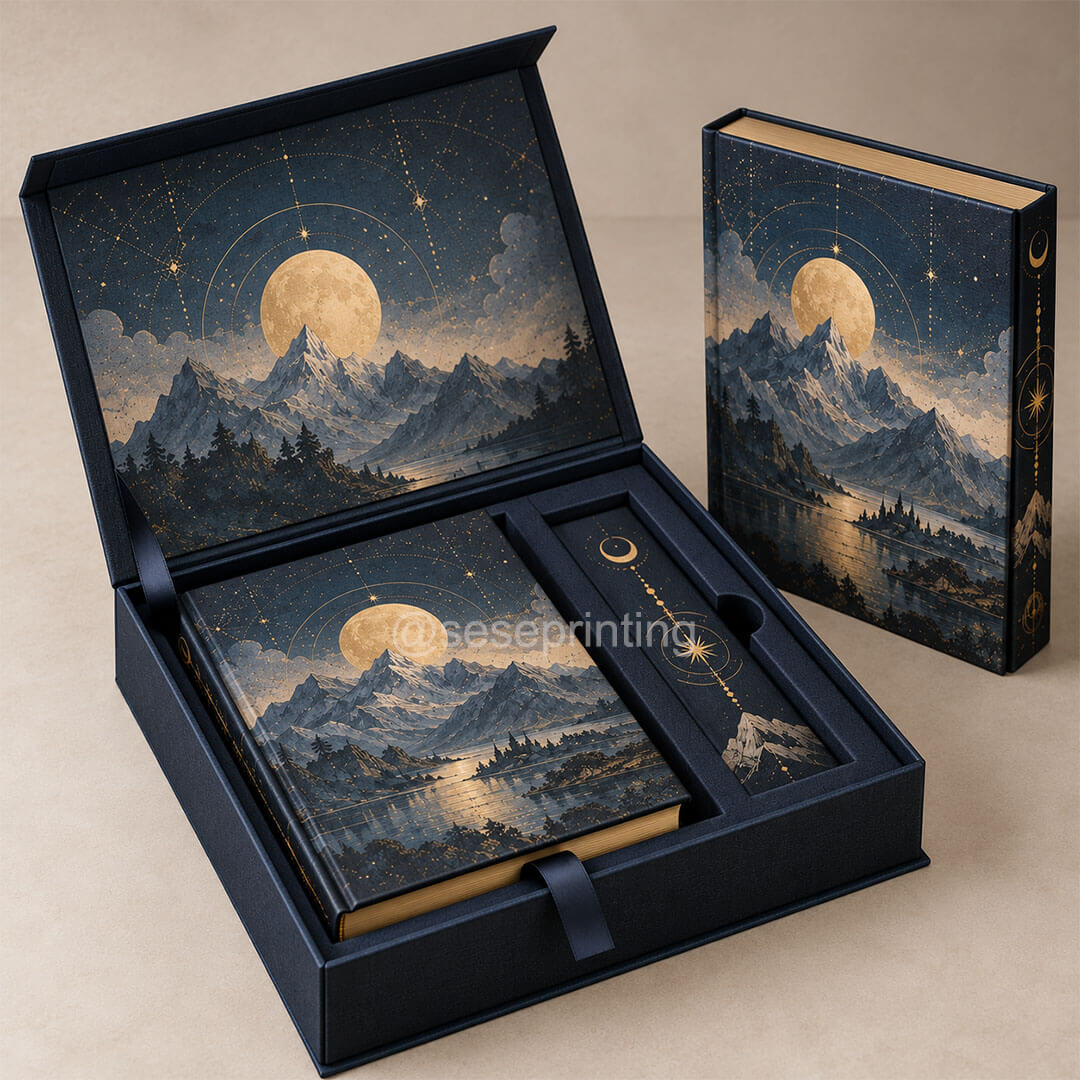
2.3 Book Gift Boxes with Custom Inserts
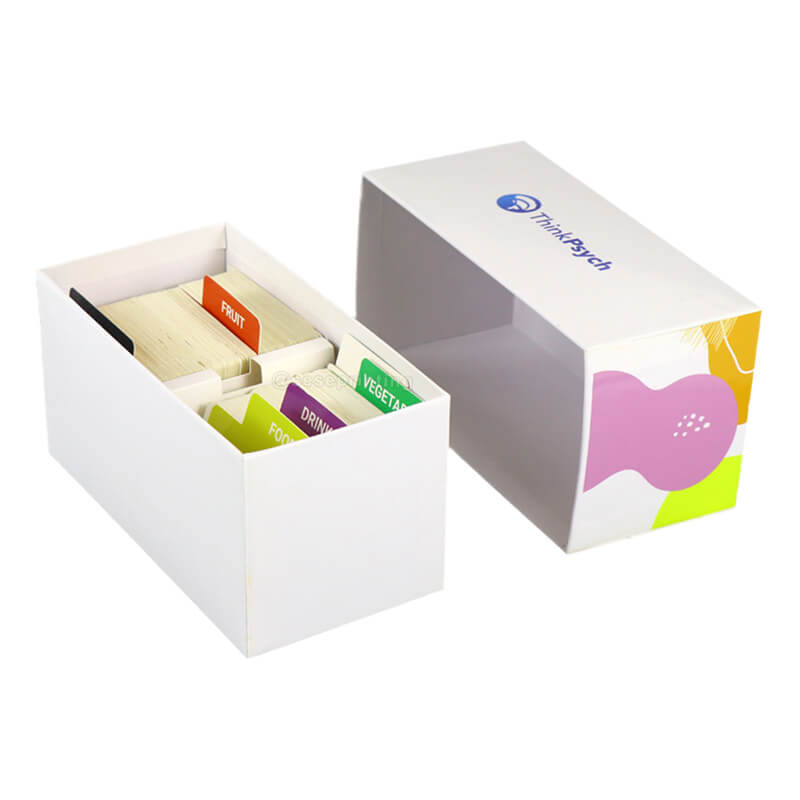
Book gift boxes can combine a special edition book with complementary items such as bookmarks, postcards, art prints, and character cards. Custom inserts keep the components organized while creating a more complete unboxing experience.
Best for: Author merchandise, book launch bundles, and premium gift sets.
2.4 Fully Illustrated Book Boxes
For visually distinctive publications, fully illustrated boxes can extend the book's creative world beyond its pages. Custom artwork, maps, character illustrations, and decorative patterns can be printed across the exterior and selected interior surfaces.
Best for: Fantasy, romance, science fiction, and illustrated special editions.
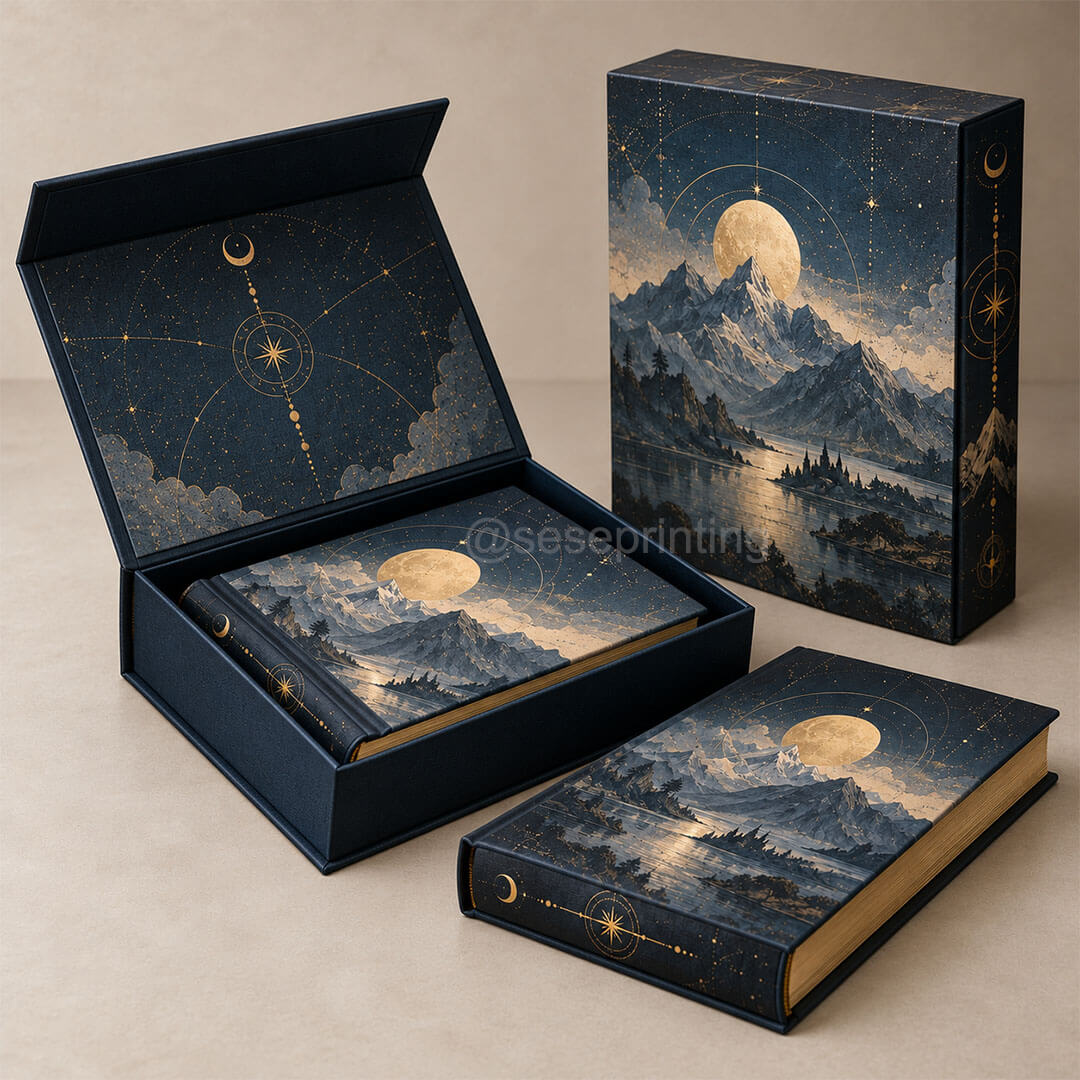
2.5 Magnetic Closure Book Boxes
Magnetic closure boxes offer a structured presentation with a hinged lid and integrated closure. They can be customized with printed exterior artwork, decorative finishes, and personalized interior panels. Custom inserts can also accommodate multiple books or accessories.
Best for: Premium gift editions, commemorative books, and luxury collector's sets.
Choosing the right packaging: Consider your book's dimensions, target audience, artwork, finishing requirements, and budget before selecting a box style. With SESE Printing's custom book printing solutions, you can explore ways to coordinate book covers, sprayed edges, endpapers, and packaging details to create a cohesive special edition collection.
2. Custom Printing and Finishing Options for Book Box Packaging
The printing techniques and finishing details you select can significantly influence the appearance and tactile quality of your book box. By combining the right materials with appropriate decorative processes, you can create packaging that complements the book and reflects its intended positioning.
Full-Color Printing
Full-color printing is ideal for reproducing illustrations, photographs, patterns, and brand graphics. It allows publishers and authors to customize the box with original artwork and coordinate its appearance with the book cover and interior pages.
For image-heavy designs, artwork preparation and proofing are important. Colors can appear different depending on the substrate, coating, and printing process, so reviewing an appropriate proof can help manage expectations.
Foil Stamping
Foil stamping uses a heated die to apply decorative foil to selected areas of a surface. Gold, silver, copper, and other available foil colors can be used to emphasize titles, logos, borders, and ornamental details.
This technique is especially effective on packaging for special edition books because it creates a visual contrast between printed artwork and reflective decorative elements.
Embossing and Debossing
Embossing raises selected design elements above the surface, while debossing presses them into the material. Both techniques add tactile dimension and can make typography, logos, and decorative patterns more distinctive.
They are often used with foil stamping or textured paper to create a more layered design. However, the suitability of these techniques depends on the material and the complexity of the artwork.
Matte and Gloss Lamination
Lamination applies a protective film to a printed surface and influences its appearance and feel.
Matte lamination: Creates a subdued, smooth appearance that works well with minimalist designs and dark color palettes.
Gloss lamination: Adds shine and can enhance the visual impact of colorful artwork.
Specialty finishes: Depending on the available production methods, other surface effects may be considered for specific projects.
The best option depends on the artwork, material, intended use, and desired visual effect.
Specialty Paper and Textured Materials
Specialty wrapping papers can introduce subtle textures, distinctive colors, or a more tactile surface. They are particularly useful for minimalist packaging and premium rigid boxes.
The selected paper should work with the printing method and decorative finishes. Material samples can help you evaluate the texture, color, and overall appearance before confirming the final specification.
Custom Interior Printing and Inserts
The inside of a book box offers additional space for artwork, brand messaging, illustrations, or complementary patterns. Custom inserts can also be designed to accommodate books, bookmarks, postcards, and other accessories.
For projects that combine book printing and packaging, coordinating these elements from the beginning can help maintain consistent colors, dimensions, and design details throughout the final product.
3. How to Match Book Box Packaging to Your Book Genre
The most effective packaging reflects the content and personality of the book inside. Matching materials, colors, illustrations, and finishes to your genre can create a more coherent product and strengthen its appeal to the intended audience.
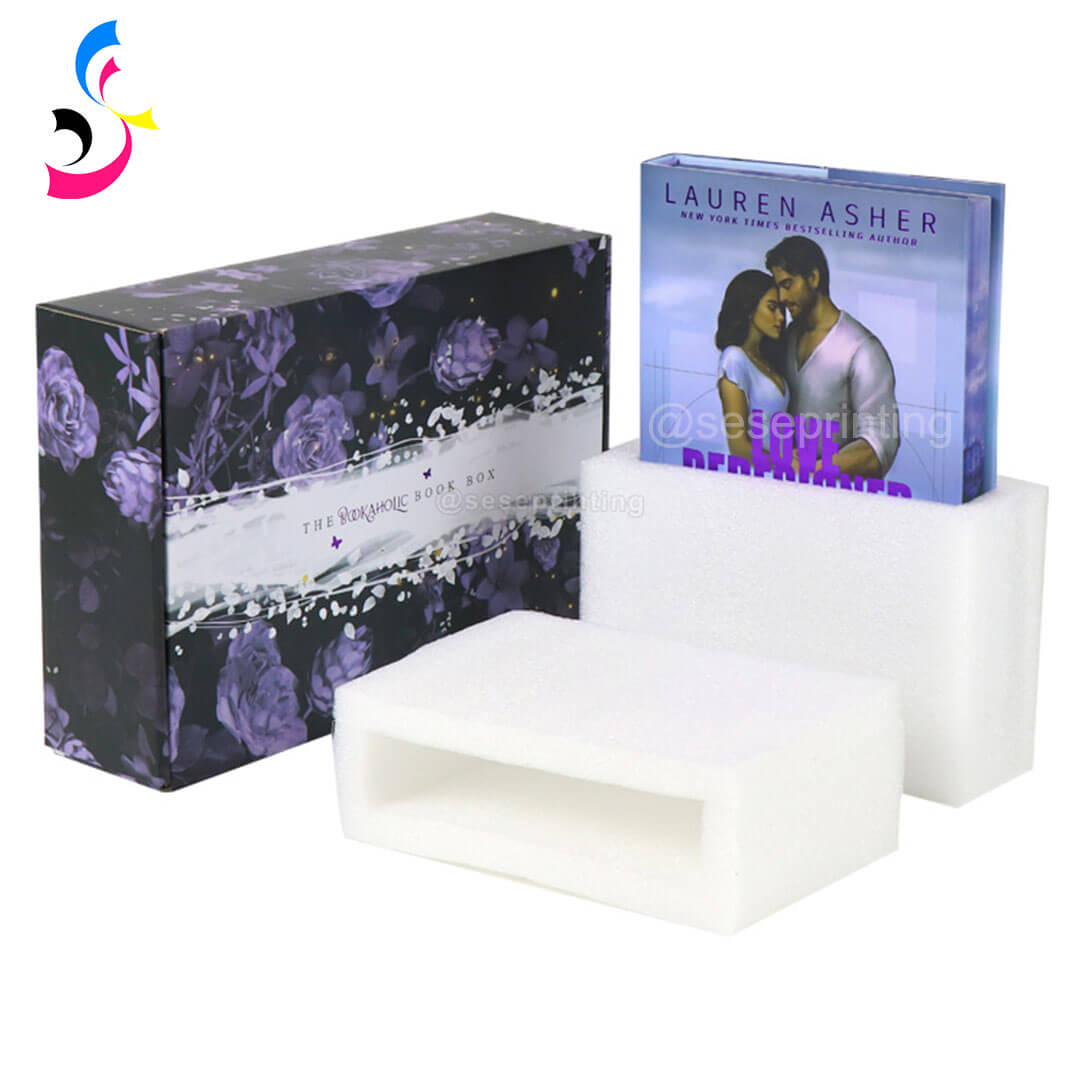
Fantasy Romance Books
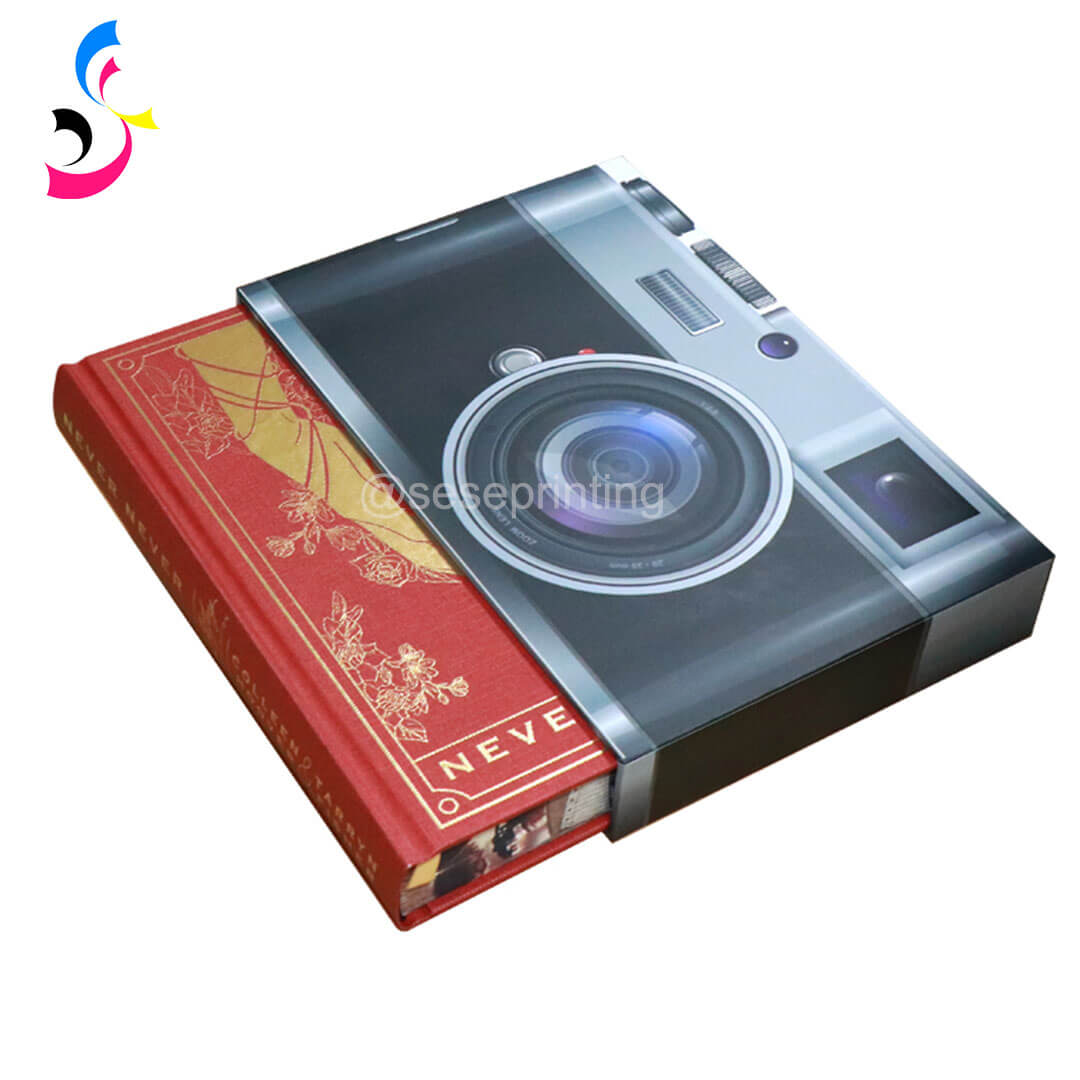
Literary Fiction
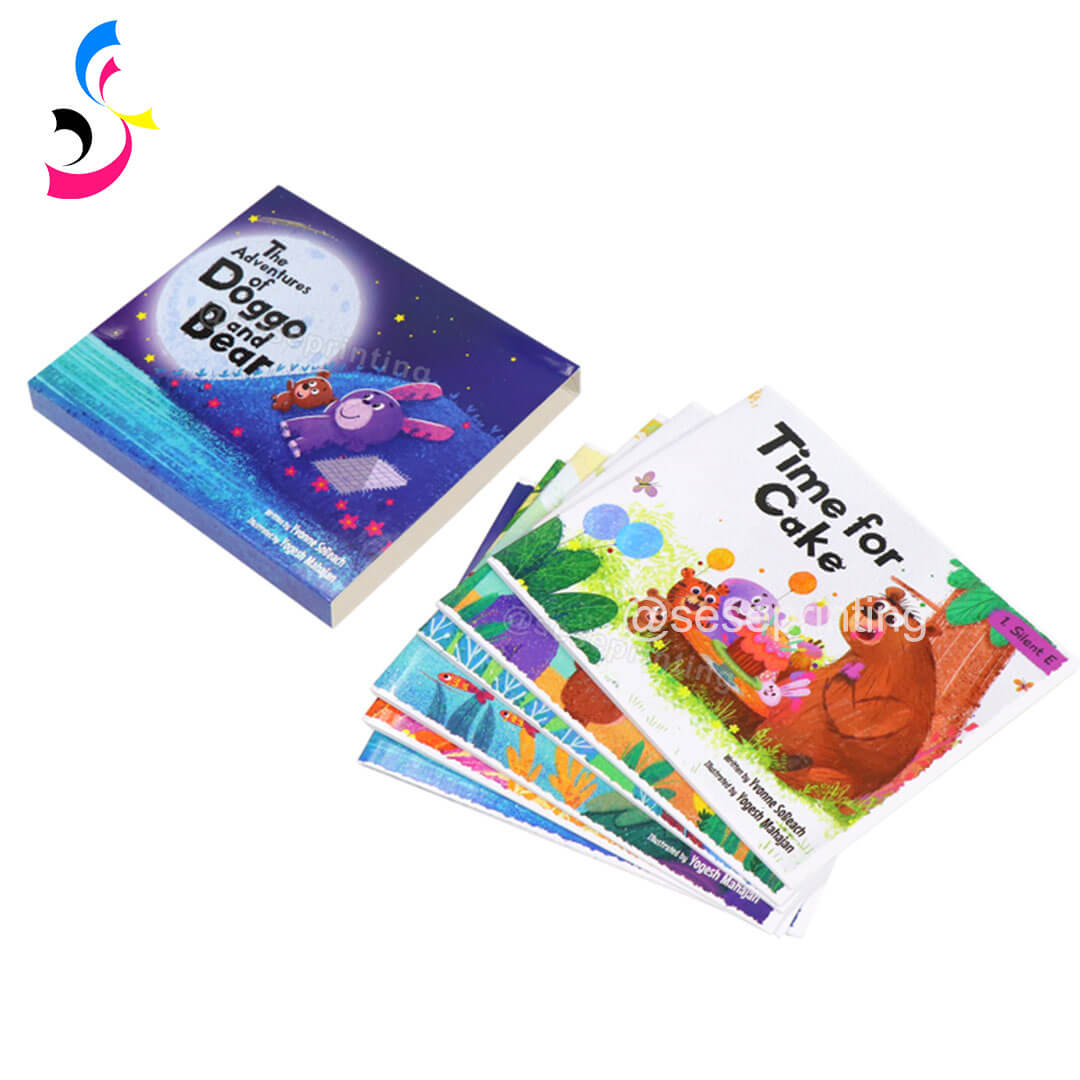
Children's Books
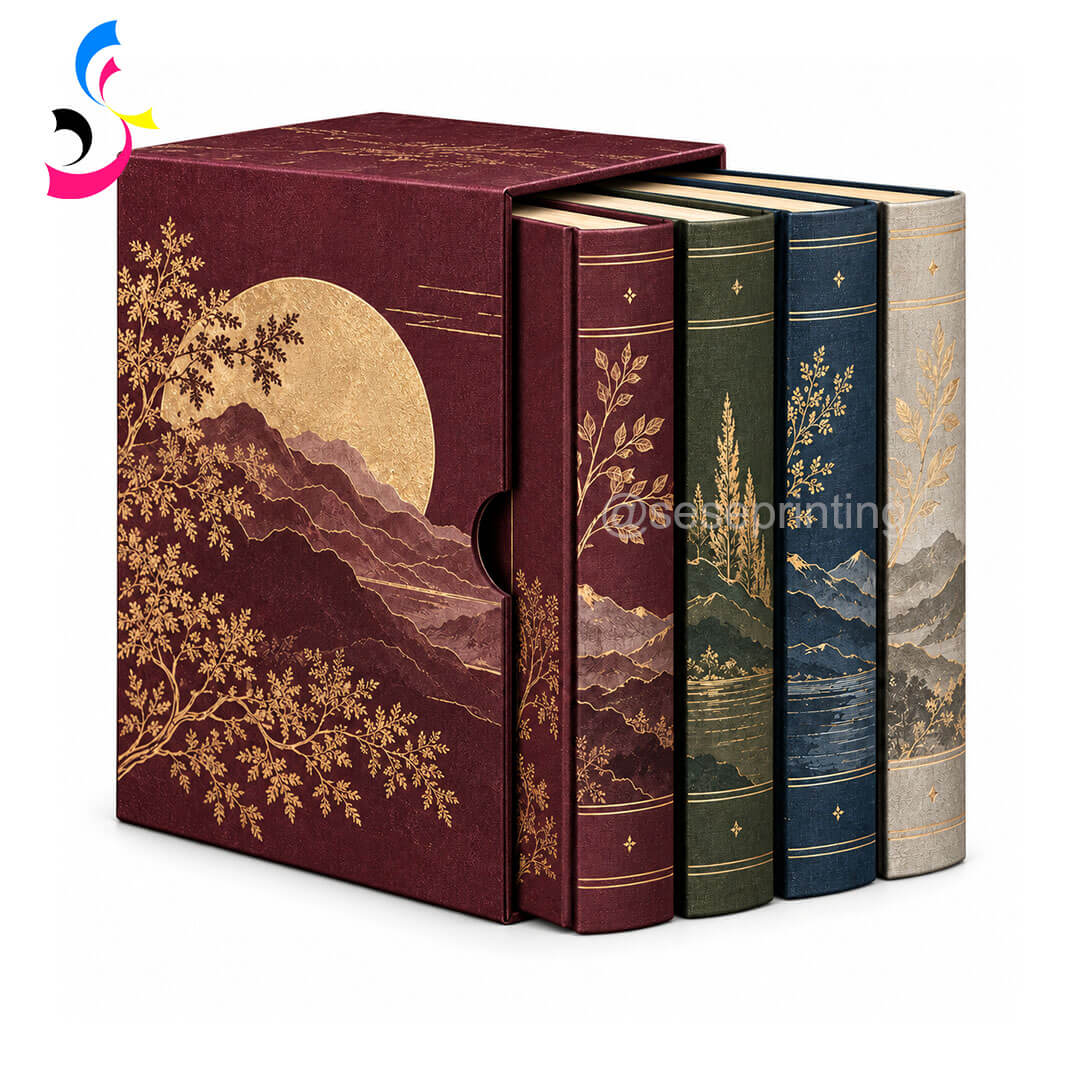
Multi-Volume Collections
Fantasy and Romance Special Editions
Fantasy and romance books often feature detailed illustrations, elaborate typography, and decorative finishes. Rigid boxes with foil-stamped artwork, illustrated interiors, and matching special edition hardcovers can help create an immersive collectible experience.
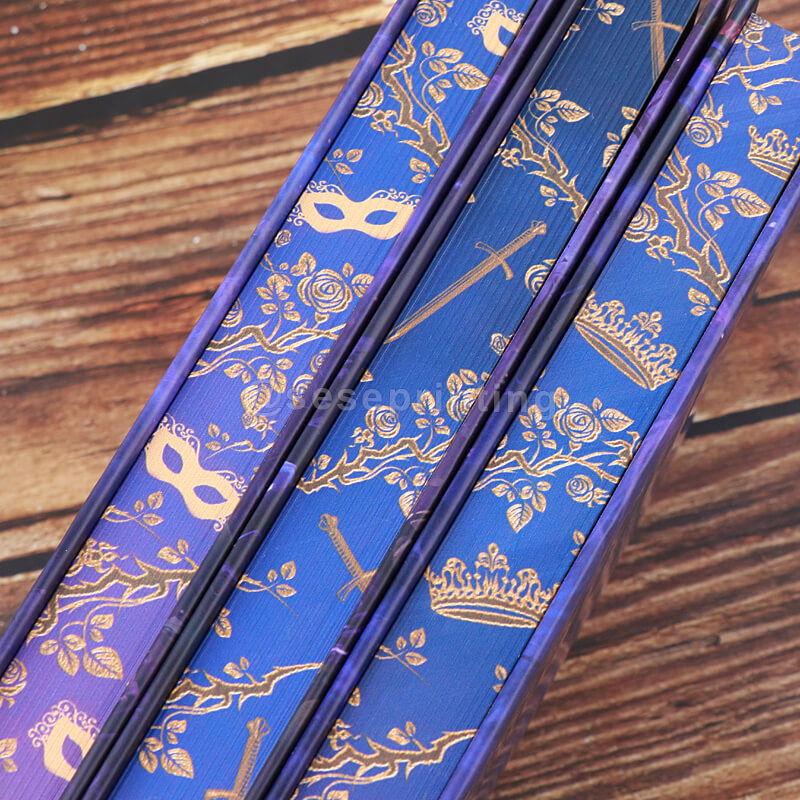
For a coordinated presentation, consider combining the box with printed endpapers, custom dust jackets, or sprayed edges. These elements can share a common color palette or decorative theme without making every surface identical.
Literary Fiction and Poetry
Literary fiction and poetry often benefit from a more restrained design approach. Neutral colors, textured paper, minimalist typography, and subtle embossing can create a timeless appearance.
A simple rigid box or custom slipcase may be sufficient when the focus is on the book's typography, material quality, and overall craftsmanship.
Art and Photography Books
For art books and photography publications, image reproduction and presentation are especially important. Full-color box printing can extend selected images from the book onto the packaging, creating a unified visual experience.
Consider materials and finishes that complement the artwork without distracting from it. The box should also be structurally appropriate for the book's dimensions and weight.
Children's Books and Educational Sets
Children's books and educational collections often use colorful graphics, friendly illustrations, and practical packaging structures. A custom box can hold multiple books, activity cards, learning materials, or other related items.
For these projects, ease of opening, insert design, and structural durability are important considerations. Materials and finishes should also be selected with the intended age group and applicable product safety requirements in mind.
Multi-Volume Collections and Omnibus Editions
For a complete series or multi-volume collection, a slipcase or rigid box can bring several books together under one visual identity.
Coordinated spine artwork, consistent typography, and matching decorative details help create a unified collection. If the books have different dimensions, the internal layout should be designed around the finished specifications of each volume.
4. How to Customize a Book Box for Your Project
Custom book box packaging involves more than selecting a style and adding artwork. The dimensions, materials, construction, printing method, and finishing processes must work together to produce a functional and visually consistent result.
Follow these steps when planning your project.
Step 1: Define Your Book Specifications
Start with the finished dimensions of your book, including the cover and dust jacket if applicable. Record the book's thickness and approximate weight, and identify any additional items that will be included in the package.
Accurate specifications help the packaging supplier determine appropriate internal dimensions and clearances.
Step 2: Choose the Right Box Structure
Decide whether your project requires a rigid box, slipcase, magnetic closure box, or another suitable structure.
Your choice should reflect the number of books, the intended presentation, the available budget, and the way the finished product will be handled, stored, or shipped.
Step 3: Prepare Your Artwork and Design Files
Prepare the artwork for each printed panel and confirm the required dieline with your supplier. Include appropriate bleed, safe areas, image resolution, and separate finishing layers where necessary.
For foil stamping, embossing, or debossing, the artwork may require additional technical preparation. Confirm these requirements before finalizing the files.
Step 4: Select Materials and Finishing Options
Choose the wrapping paper, board, surface finish, and decorative processes that fit your design.
For example, a dark illustrated box may benefit from matte lamination and selective gold foil, while a minimalist design may rely on textured paper and blind embossing.
Consider the interaction between materials and finishes rather than evaluating each option independently.
Step 5: Plan Inserts and Accessories
If the package includes several books or additional items, determine how each component will be positioned and supported.
Custom inserts should accommodate the dimensions and weight of the contents while allowing them to be removed without unnecessary difficulty. For fragile or heavier components, discuss the structural requirements with your supplier.
Step 6: Review a Sample Before Production
A sample can help you evaluate the box structure, print quality, color appearance, material texture, and finishing effects.
For more complex projects, a structural prototype and a finished printed sample may serve different purposes. Confirm which sample types are available and whether any sampling costs or additional lead times apply.
Step 7: Confirm the Production Details
Before approving production, confirm the specifications, order quantity, approved artwork, finishing requirements, packing method, and delivery arrangements.
Providing complete information at the quotation stage helps the supplier assess the project more accurately and identify potential production issues early.
5. Custom Book Box Packaging: What Affects the Cost?
Box Size and Structure
Larger boxes generally require more material, while complex structures may involve additional cutting, folding, assembly, or finishing processes.
Rigid boxes, magnetic closure boxes, and custom inserts can have different production requirements. Selecting a structure that meets your needs without unnecessary complexity can help control costs.
Material Selection
The type and thickness of the board, the wrapping paper, and any specialty materials affect the cost of production.
Premium textured papers and certain specialty materials may cost more than standard options. The appropriate choice depends on your desired appearance, structural requirements, and budget.
Printing Coverage and Artwork Complexity
A simple box with limited printing may have different production requirements from a design featuring full-color artwork across multiple panels.
Complex illustrations, multiple printed components, and additional proofing requirements should be considered when planning the project.
Decorative Finishing
Foil stamping, embossing, debossing, and other specialty finishes can add production steps and, in some cases, tooling costs.
Using these effects selectively can help highlight the most important design elements while maintaining a controlled production budget.
Order Quantity
Order quantity influences material purchasing, setup costs, and production efficiency. The unit price may decrease at higher quantities, although the actual pricing structure depends on the supplier, box specifications, and production method.
When requesting a quotation, consider both your initial requirements and any realistic future demand.
Inserts and Additional Components
Bookmarks, postcards, ribbons, custom inserts, and other accessories add materials and production or assembly steps. If the package includes several components, provide a complete list so the supplier can evaluate the project as a whole.
6. Why Choose Custom Printing for Special Edition Book Packaging?
Create a Consistent Visual Identity
When the book and its packaging are planned together, the cover artwork, box graphics, endpapers, and decorative details can share a coordinated visual language.
This is particularly useful for multi-volume collections and special editions with multiple customizable components.
Highlight Premium Finishing Details
Foil stamping, embossing, debossing, and specialty papers can help emphasize key design elements. Carefully selected finishes introduce visual and tactile contrast without requiring excessive decoration.
Build a More Memorable Unboxing Experience
Custom interior printing, organized inserts, and coordinated accessories make the opening experience part of the product design.
For collector's editions and book gift sets, these details can help the packaging feel purposefully designed rather than simply functional.
Adapt the Packaging to Your Project
Custom box dimensions, structures, materials, and inserts can be developed around the specific book format and contents.
This flexibility allows publishers to consider packaging that accommodates single books, multi-volume sets, and books accompanied by additional merchandise.
Coordinate Book Printing and Packaging
Working with a supplier that understands both book printing and packaging can simplify communication about artwork, materials, finishes, and production specifications.
SESE Printing provides custom book printing solutions for projects with different formats, finishes, and design requirements. For special edition books, coordinating the printed book and its packaging from the planning stage can help maintain consistency across the finished product.
Whether you are developing a luxury hardcover novel, a boxed book series, or a custom gift set, our team can discuss your requirements and help you explore suitable printing and packaging options.
7. Frequently Asked Questions About Custom Book Box Packaging
Q1: Can I customize a book box with my own artwork?
Yes. Custom book boxes can be designed around your illustrations, logos, typography, and brand colors. Depending on the box structure and printing method, customization may include exterior panels, interior surfaces, and coordinated inserts.
For the best results, confirm the required artwork specifications and dielines with your printing supplier before preparing the final files.
Q2: What types of book boxes are available for special edition books?
Common options include rigid boxes, slipcases, magnetic closure boxes, and gift boxes with custom inserts. The most suitable choice depends on the book dimensions, number of volumes, intended presentation, and budget.
A slipcase may be appropriate for a book series, while a rigid gift box with inserts may work better for a collection containing books and accessories.
Q3: What finishing options can I use for custom book boxes?
Depending on the material and production method, options may include foil stamping, embossing, debossing, matte or gloss lamination, and specialty wrapping papers.
These finishes can be combined to create different visual effects. It is advisable to confirm material compatibility and review a sample when the design includes multiple specialty processes.
Q4: Can I order book boxes with matching special edition books?
Yes. Planning the book and packaging together can help coordinate the artwork, colors, and finishing details across both products.
For example, a special edition hardcover may feature a foil-stamped cover, printed endpapers, and sprayed edges, while its matching box uses related illustrations and metallic accents to create a cohesive collection.
Q5: Can custom book boxes hold multiple books and accessories?
Yes. Custom packaging can be designed for multiple books, bookmarks, postcards, art prints, and other accessories. The box dimensions and insert layout should be based on the size, weight, and quantity of the items being packaged.
For complex gift sets, a structural sample can help confirm that everything fits correctly and can be removed easily.
Q6: What is the minimum order quantity for custom book box packaging?
The minimum order quantity depends on the box structure, materials, printing method, and supplier's production capabilities. Different packaging types may have different minimums.
Contact SESE Printing with your preferred box style, estimated quantity, and customization requirements to discuss suitable production options for your project.
Q7: How long does custom book box production take?
Production time varies according to the packaging structure, order quantity, artwork approval, material availability, and finishing requirements. Projects involving custom tooling, complex inserts, or multiple specialty finishes may require additional preparation.
When planning a book launch or release date, allow time for artwork review, sampling where needed, production, and shipping. Confirm the estimated schedule with your supplier before placing the order.
Q8: What information should I provide when requesting a quotation?
Provide your book dimensions, preferred box style, estimated order quantity, artwork or reference images, materials, finishing options, and any insert requirements.
If you are also printing the books, include the book format and relevant finishing specifications. This information helps the supplier evaluate the project and recommend an appropriate solution.
8. Conclusion: Bring Your Special Edition Packaging Ideas to Life
The right book box packaging can do much more than protect a special edition book. It can extend the book's artwork, highlight premium finishing details, organize complementary accessories, and create a cohesive presentation that reflects the character of the publication.
From luxury rigid boxes and illustrated slipcases to magnetic closure boxes and custom gift sets, the best solution depends on your book format, genre, design goals, and production budget. Careful planning of the box structure, materials, printing methods, and finishing options can help turn an initial concept into a practical packaging solution.
At SESE Printing, we work with customers on custom book printing projects with a range of formats, materials, and finishing requirements. If you are planning a special edition novel, a multi-volume collection, or a premium book gift set, we can discuss how book printing and custom packaging can work together to support your project.
Ready to develop your custom book box packaging?
Share your book specifications, artwork, preferred box style, finishing ideas, and estimated quantity with SESE Printing. Our team can help you explore suitable options for your next special edition book project.
Get in touch with SESE Printing to discuss your custom book printing and packaging requirements.
 Hardcover vs Paperback: Which Book Format Is Better?
 You May Also Like


 Tel
Tel
 Email
Email
 Address
702 No. 21 Huizhong Road, Shiqiao St, Panyu District. Guangzhou city, Guangdong Province. China

Joy
 Whatsapp