



 Home
How to Print a Childrens Book: Complete Guide for Authors and Publishers
 Oct 26,2026

 SESE
How to Print a Childrens Book: Complete Guide for Authors and Publishers
Printing a children's book involves more than choosing colorful illustrations and putting them on paper. From selecting the right book format and paper materials to deciding on printing methods, binding, and finishing options, every production detail influences the final book's appearance, durability, and reading experience.
For authors, publishers, educational content providers, and brands, understanding the children's book printing process helps ensure that the finished product meets both creative expectations and practical requirements. Whether you are producing a hardcover picture book, a paperback storybook, a board book for toddlers, or an interactive educational book, the right printing specifications can make a significant difference in quality and production costs.
In this guide, we will explain how to print a children's book, covering book formats, paper selection, printing methods, binding options, customization possibilities, quality control, and how to choose a reliable children's book printing manufacturer.
1. Choose the Right Children's Book Format
Different formats offer different advantages in terms of durability, presentation, usability, and manufacturing costs.
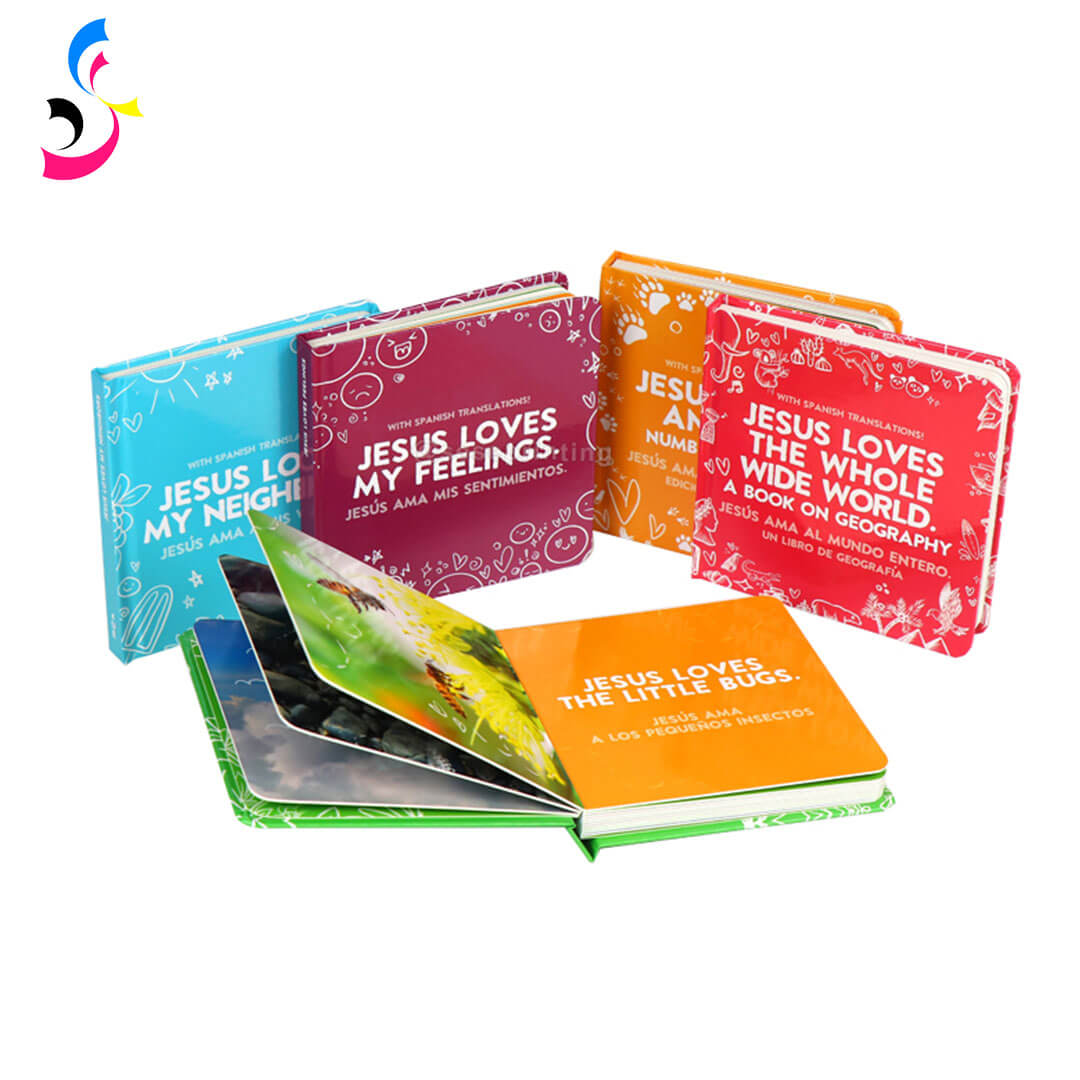
Board Books
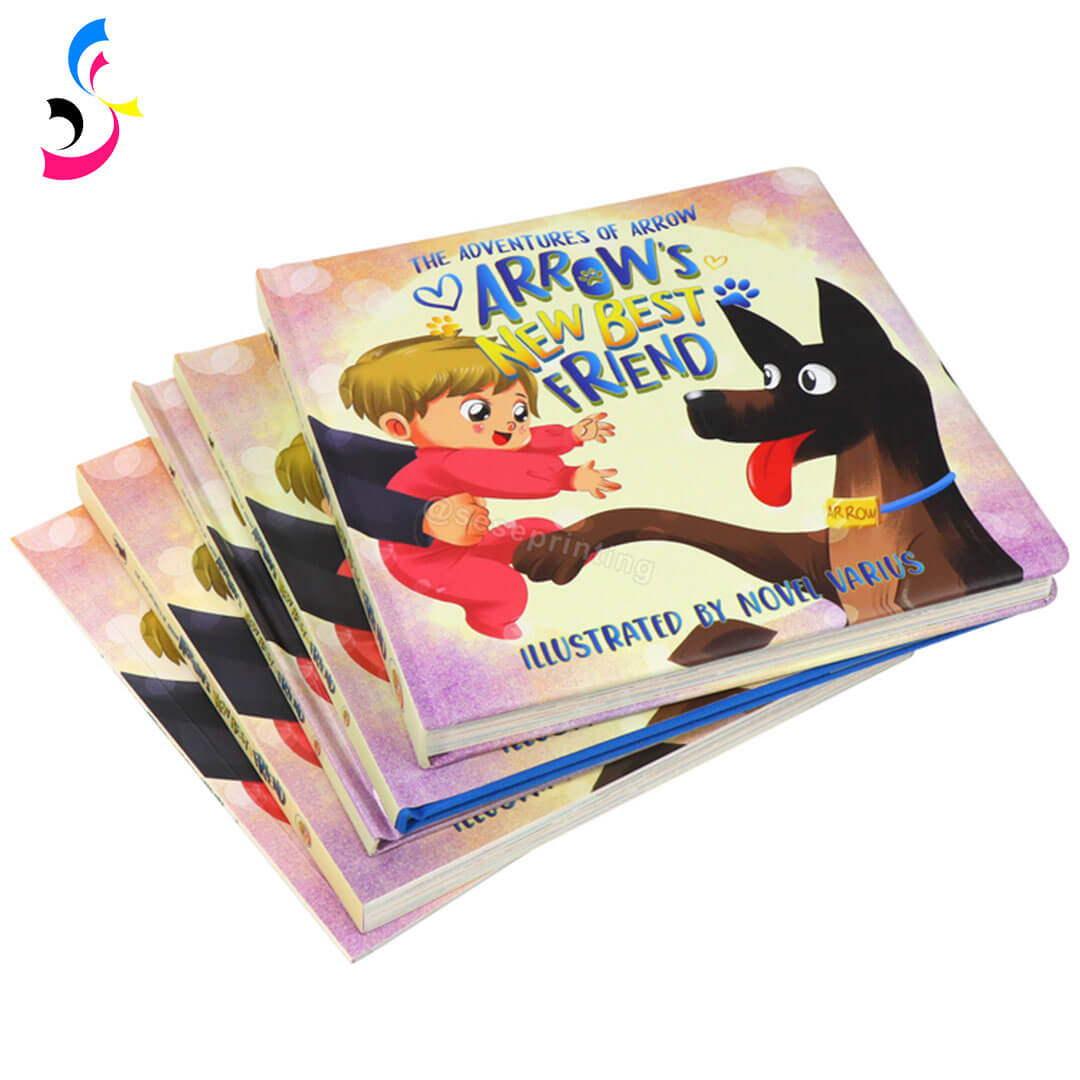
Hardcover Children's Books
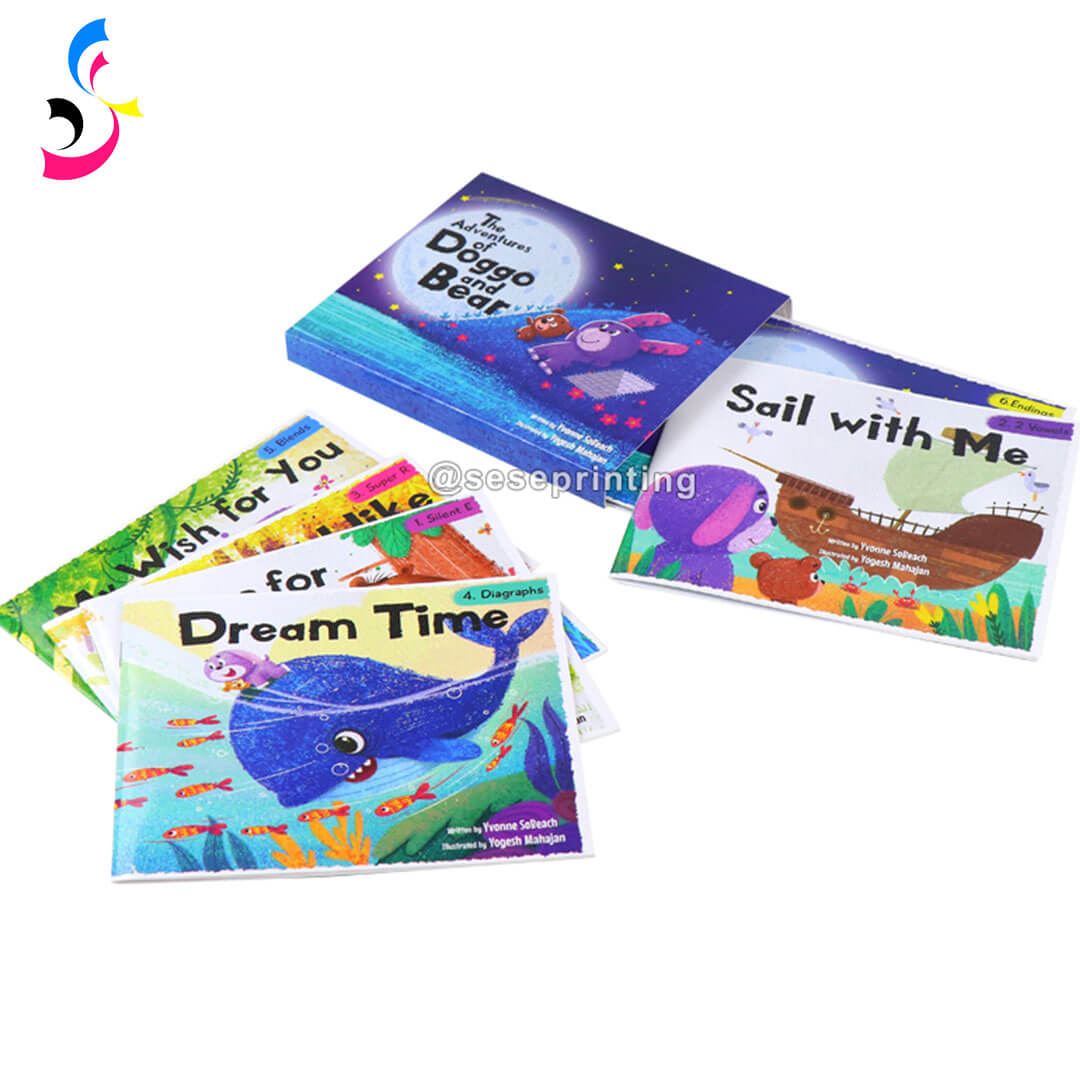
Paperback Children's Books
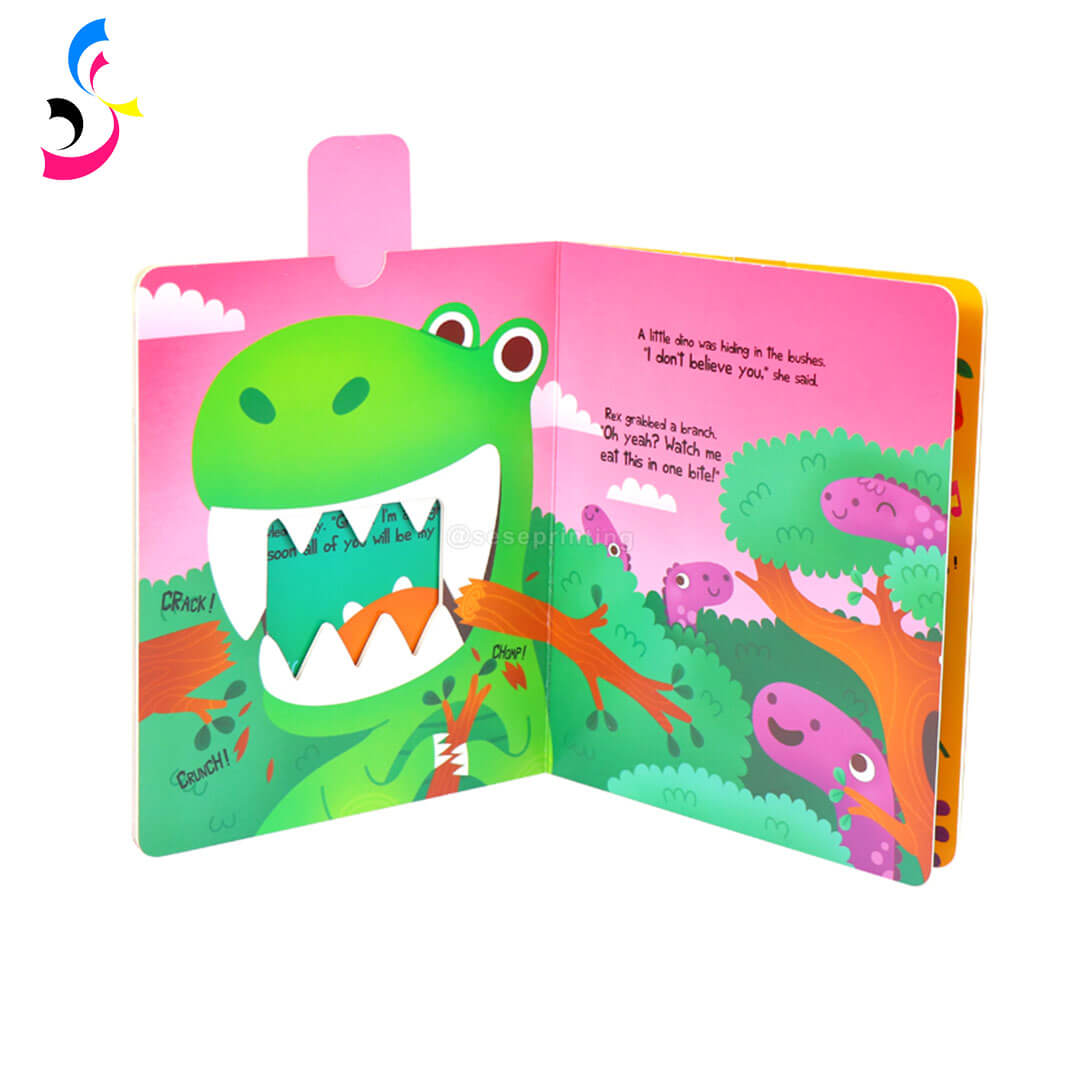
Interactive Children's Books
1.1 Board Books
Board books are commonly designed for babies and toddlers. They feature thick, rigid pages that are more resistant to bending and tearing than conventional paper pages.
Typical applications include:
- Early learning and alphabet books.
- Counting and shape-recognition books.
- Animal and everyday-object picture books.
- Interactive books for toddlers.
1.2 Hardcover Children's Books
Hardcover children's books feature rigid covers that provide structural support and a premium appearance. They are widely used for illustrated storybooks, gift books, educational publications, and library editions.
Common customization options include printed hardcover cases, dust jackets, custom endpapers, foil stamping, embossing, and ribbon bookmarks.
1.3 Paperback Children's Books
Paperback books use flexible covers and are generally lighter and more economical than hardcover editions. They are suitable for storybooks, early readers, activity books, and educational publications produced in larger quantities.
Common features include:
- Flexible printed covers.
- Matte or gloss lamination.
- Full-color interior pages.
- Perfect binding or other suitable binding methods.
1.4 Interactive and Special-Format Children's Books
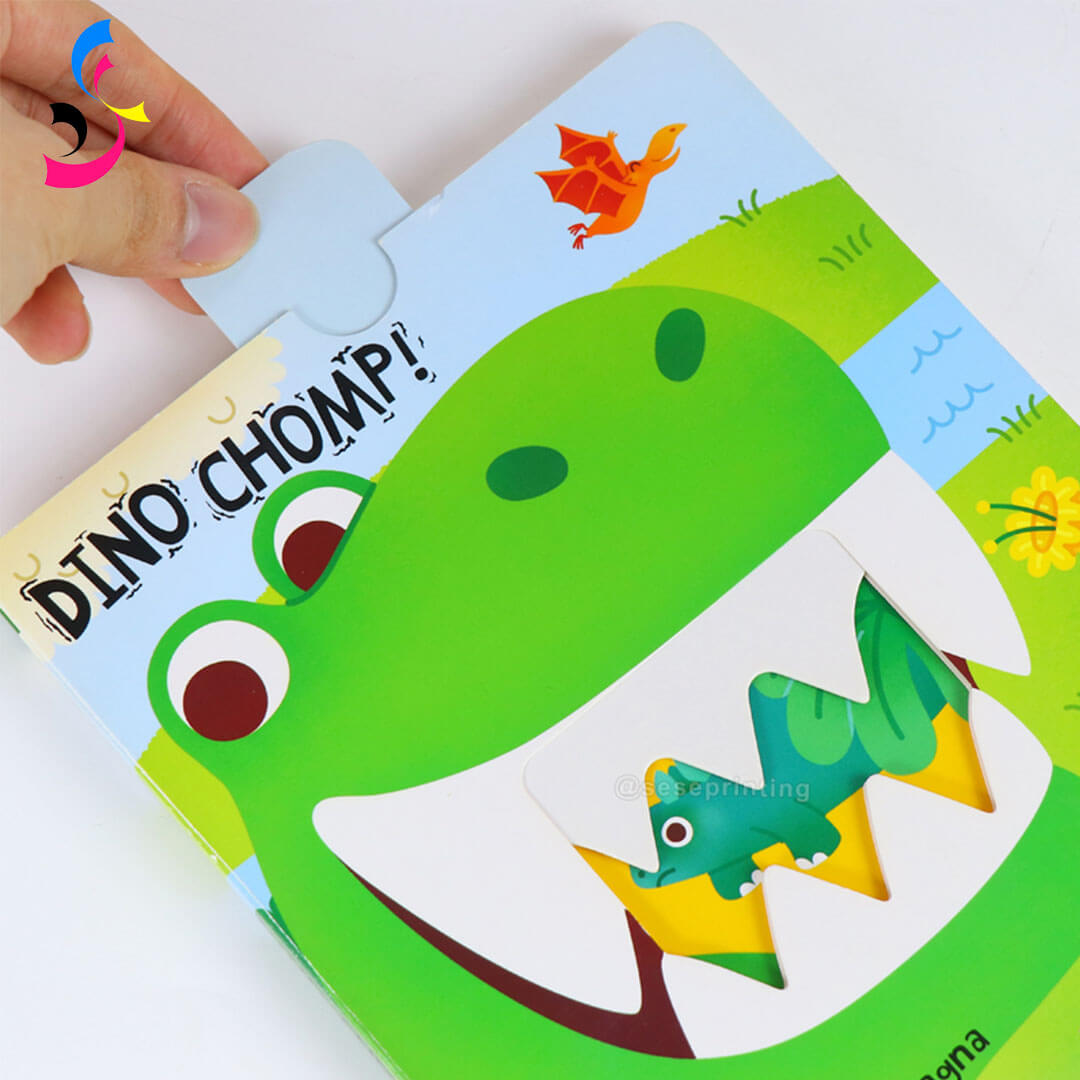
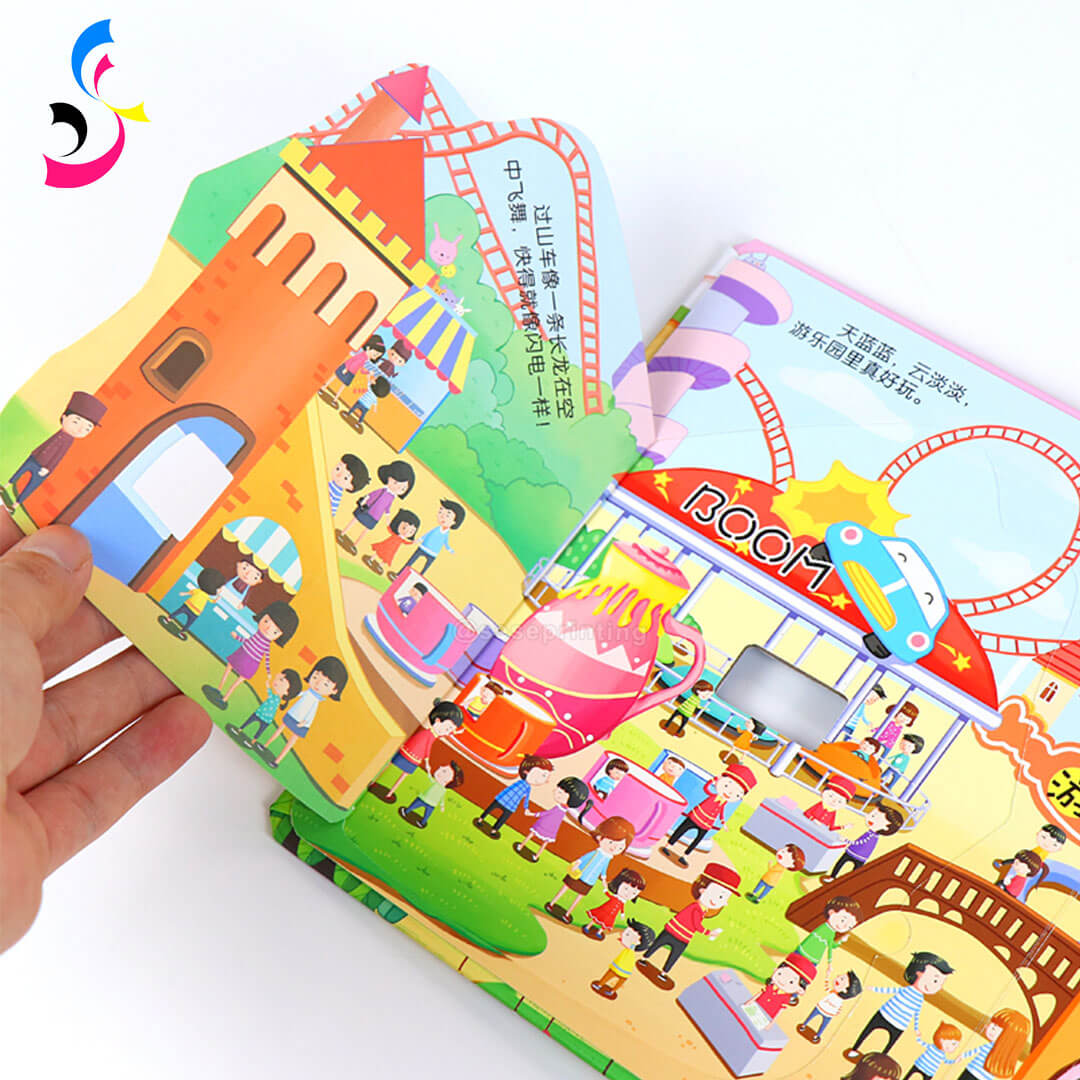
Some children's books incorporate interactive elements to encourage engagement and learning. Examples include lift-the-flap books, pop-up books, die-cut books, foldout pages, and touch-and-feel books.
These formats may require specialized structural engineering, die-cutting, additional assembly, and more detailed quality inspections. Their costs and production schedules also depend on the complexity of the design.
When selecting a format, consider the following factors:
- Target age group.
- Intended reading experience.
- Expected frequency of use.
- Required durability.
- Budget and order quantity.
- Available production and finishing capabilities.
2. Select the Right Paper and Printing Materials
Paper selection plays an important role in children's book printing. It affects color reproduction, image clarity, page thickness, flexibility, durability, and the overall feel of the finished book.
2.1 Common Paper Types for Children's Books
Coated paper
Coated paper has a treated surface that generally provides good image sharpness and color reproduction. It is commonly used for illustrated storybooks, picture books, and educational publications featuring colorful graphics.
Gloss-coated paper can produce vivid images, while matte-coated paper provides a less reflective appearance.
Uncoated paper
Uncoated paper offers a more natural surface and is often used for text-focused books, early readers, and publications where a softer reading experience is preferred.
Heavyweight paper
Heavier paper can provide greater substance and may help reduce show-through in certain applications. It is frequently considered for picture books and publications containing large areas of color.
However, paper weight alone does not determine stiffness or opacity. Paper bulk, composition, and finishing should also be evaluated.
Paperboard for board books
Board books require thick paperboard or laminated board constructions rather than conventional interior paper alone. The board thickness, printed surfaces, and assembly method must be selected according to the intended book structure.
2.2 How to Choose the Right Paper Weight
Paper weight is commonly measured in GSM (grams per square meter). Higher GSM generally indicates heavier paper, but it does not automatically mean the paper is thicker or more rigid.
When selecting paper, consider:
- Image quality: Detailed illustrations may benefit from a suitable coated stock.
- Opacity: Appropriate opacity helps reduce text and images showing through from the reverse side.
- Page flexibility: The paper should suit the intended book format and binding method.
- Book thickness: Paper selection affects the overall thickness and weight of the finished book.
- Cost: Higher-grade or heavier materials can increase material and shipping costs.
For hardcover picture books, coated paper is often a practical option for full-color illustrations. For board books, paperboard construction is essential. For text-heavy children's books, uncoated or standard book paper may be more appropriate.
2.3 Choosing Materials for Different Age Groups
The intended reader should influence material selection.
For babies and toddlers, durability, construction quality, and applicable product safety requirements deserve particular attention. For preschoolers, illustrated books often prioritize visual appeal and comfortable handling. For school-age children, the balance may shift toward readability, illustration quality, and overall production cost.
Materials, inks, coatings, and any detachable components should be evaluated against the relevant requirements for the destination market and intended age group.
3. Choose the Right Printing Method and Color Specifications
Because children's publications frequently rely on illustrations, photographs, and colorful backgrounds, proper artwork preparation and color management are especially important.
3.1 Full-Color Printing for Children's Books
Full-color printing is widely used for picture books, illustrated stories, activity books, and educational publications.
Commercial printing commonly uses the CMYK color model, which combines cyan, magenta, yellow, and black to reproduce a wide range of colors.
Before submitting artwork, authors and publishers should consider:
- High-resolution illustrations and images.
- Correct CMYK color settings.
- Consistent color treatment across pages.
- Appropriate image contrast and detail.
- Bleed and safe margins.
- Embedded fonts and correctly prepared PDF files.
Colors displayed on a computer monitor may differ from the final printed result because screens use light-based RGB colors, while conventional process printing uses ink. Color expectations should therefore be confirmed through an appropriate proofing process.
3.2 Digital Printing vs. Offset Printing
Digital printing and offset printing are two common methods used for book production. The best choice depends on the order quantity, book specifications, color requirements, and available production equipment.
| Comparison | Digital Printing | Offset Printing |
|---|---|---|
| Typical application | Short runs and smaller quantities | Medium to large print runs |
| Initial setup | Generally lower | Generally higher |
| Unit cost | Often suitable for smaller orders | Often more economical at larger quantities |
| Production flexibility | Convenient for short runs and variable content | Well suited to consistent, fixed print runs |
| Color management | Suitable for many commercial applications | Supports controlled, repeatable production |
| Best selection criteria | Quantity, turnaround, and flexibility | Quantity, unit cost, and production specifications |
For authors testing a new title or publishers ordering a limited quantity, digital printing may be appropriate. For larger production runs, offset printing can offer better unit-cost efficiency.
3.3 Preparing Artwork for Printing
Print-ready artwork helps reduce production errors and avoid unnecessary delays.
Before submitting files, confirm the following:
- The document dimensions match the agreed finished book size.
- Bleed is included where artwork extends to the edge.
- Important text and illustrations remain within safe margins.
- Images meet the manufacturer's resolution requirements.
- Fonts are embedded or correctly handled.
- Page numbers and page sequences are correct.
- Cover files account for spine width and binding requirements.
- Interior and cover files are supplied in the requested format.
4. Select the Right Binding Method
Binding determines how the pages are assembled, how the book opens, and how well it withstands repeated handling.
The right binding method depends on the book format, page count, paper type, intended use, and budget.
Hardcover Binding
Perfect Binding

Saddle Stitching Binding
Board Book Biding
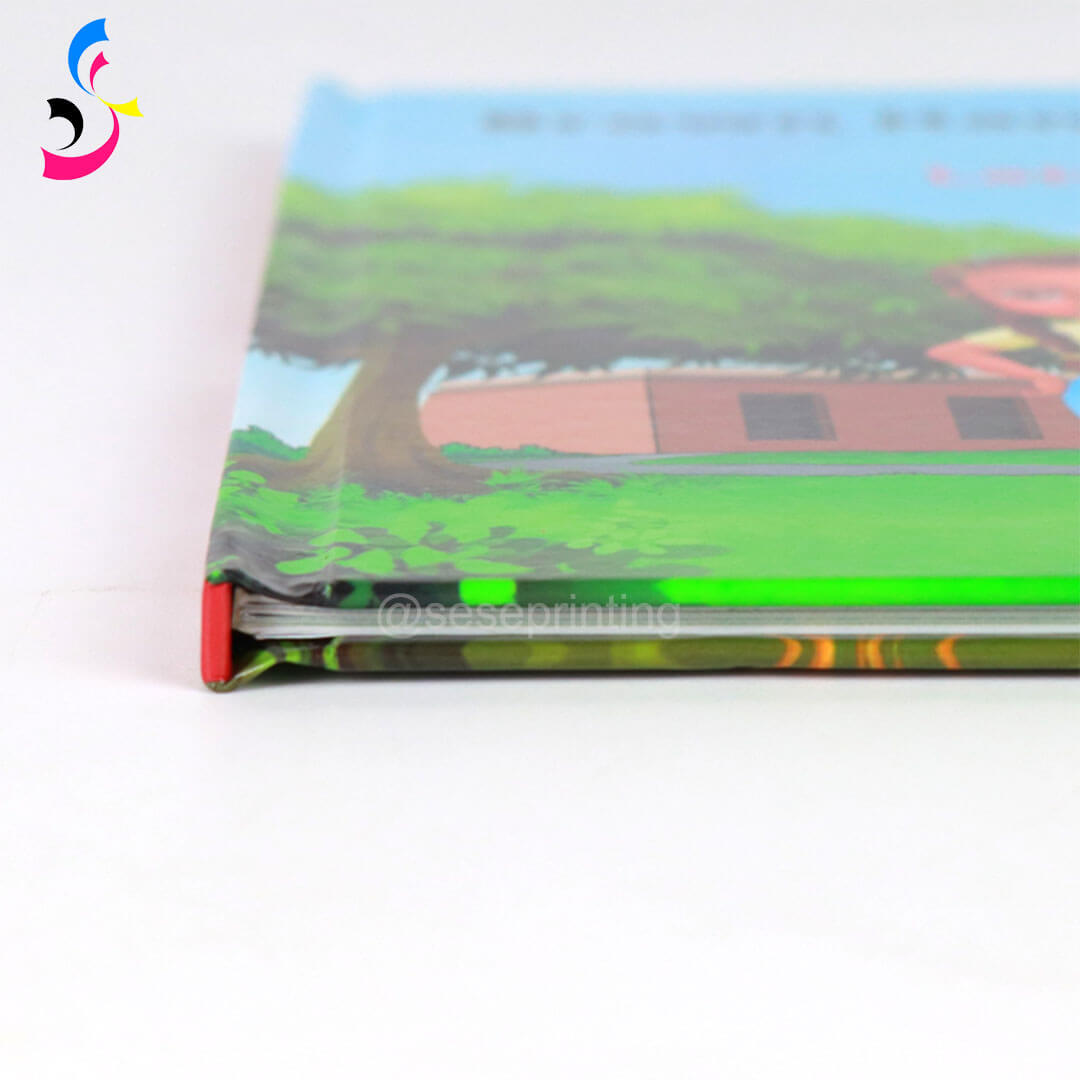
4.1 Hardcover Binding
Hardcover binding uses rigid cover boards wrapped in printed paper or other cover materials. The book block is attached to the case to create a sturdy finished product.
It is suitable for premium picture books, gift books, educational titles, and publications intended for repeated use.
Hardcover books can be customized with printed cases, dust jackets, foil stamping, decorative endpapers, and other finishing options.
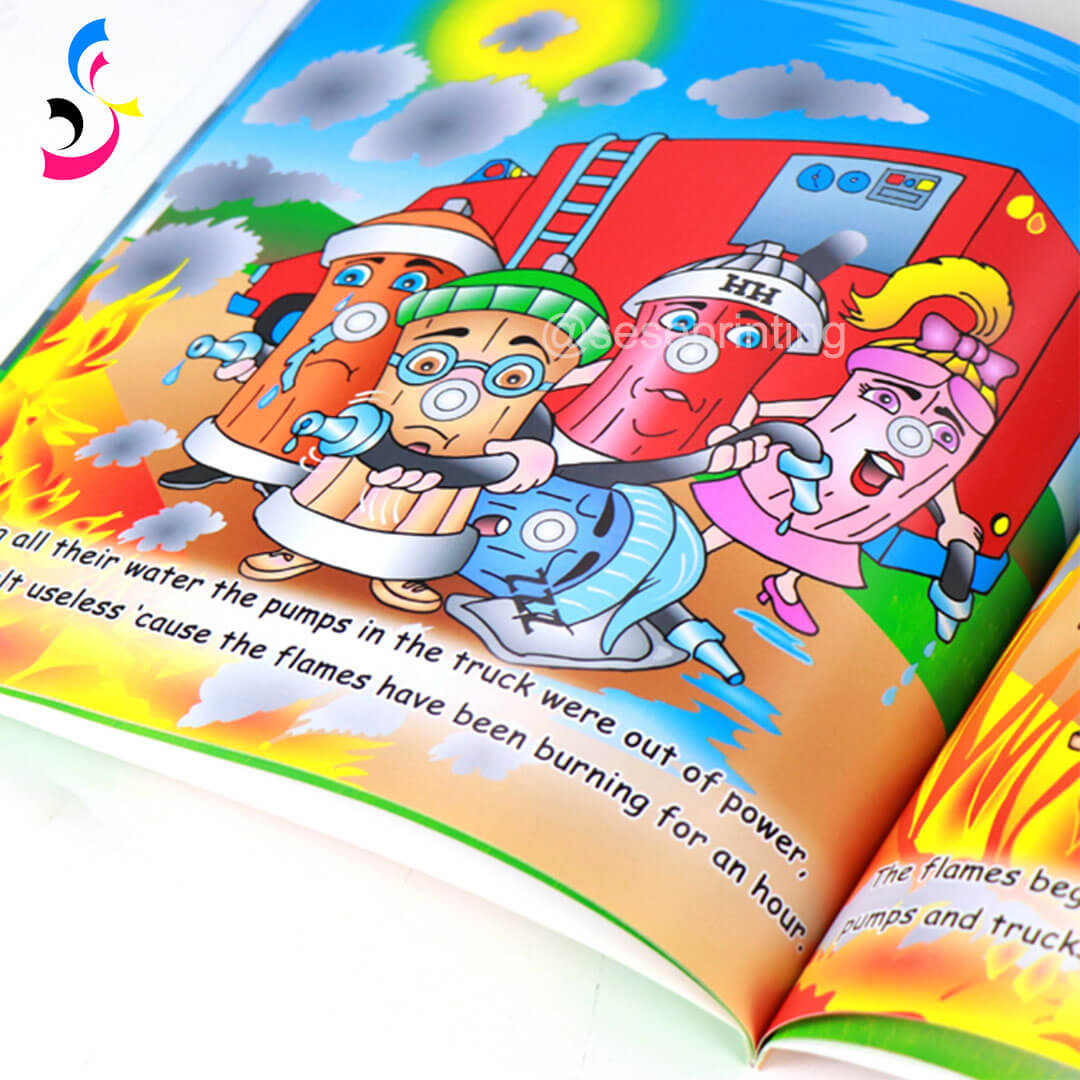
4.2 Perfect Binding
Perfect binding is commonly used for paperback children's books. The pages are assembled into a book block, and adhesive is applied to the prepared spine before the cover is attached.
It is suitable for storybooks, early readers, activity books, and many standard educational publications.
Two common adhesive options are EVA hot-melt adhesive and PUR reactive polyurethane adhesive.
- EVA binding: A widely used, economical option for many standard paperback projects.
- PUR binding: Often offers stronger adhesion and improved performance with certain coated papers, depending on the paper and production conditions.
Neither adhesive is universally better for every book. Paper properties, spine preparation, adhesive application, and production quality all influence the finished result.
4.3 Saddle Stitching
Saddle stitching uses wire staples through the folded sheets along the spine. It is suitable for thinner children's booklets, activity books, and simple educational publications.
The maximum practical page count depends on paper thickness, finished size, and the equipment used. Because the pages are nested, page creep and trimming should also be considered during production planning.
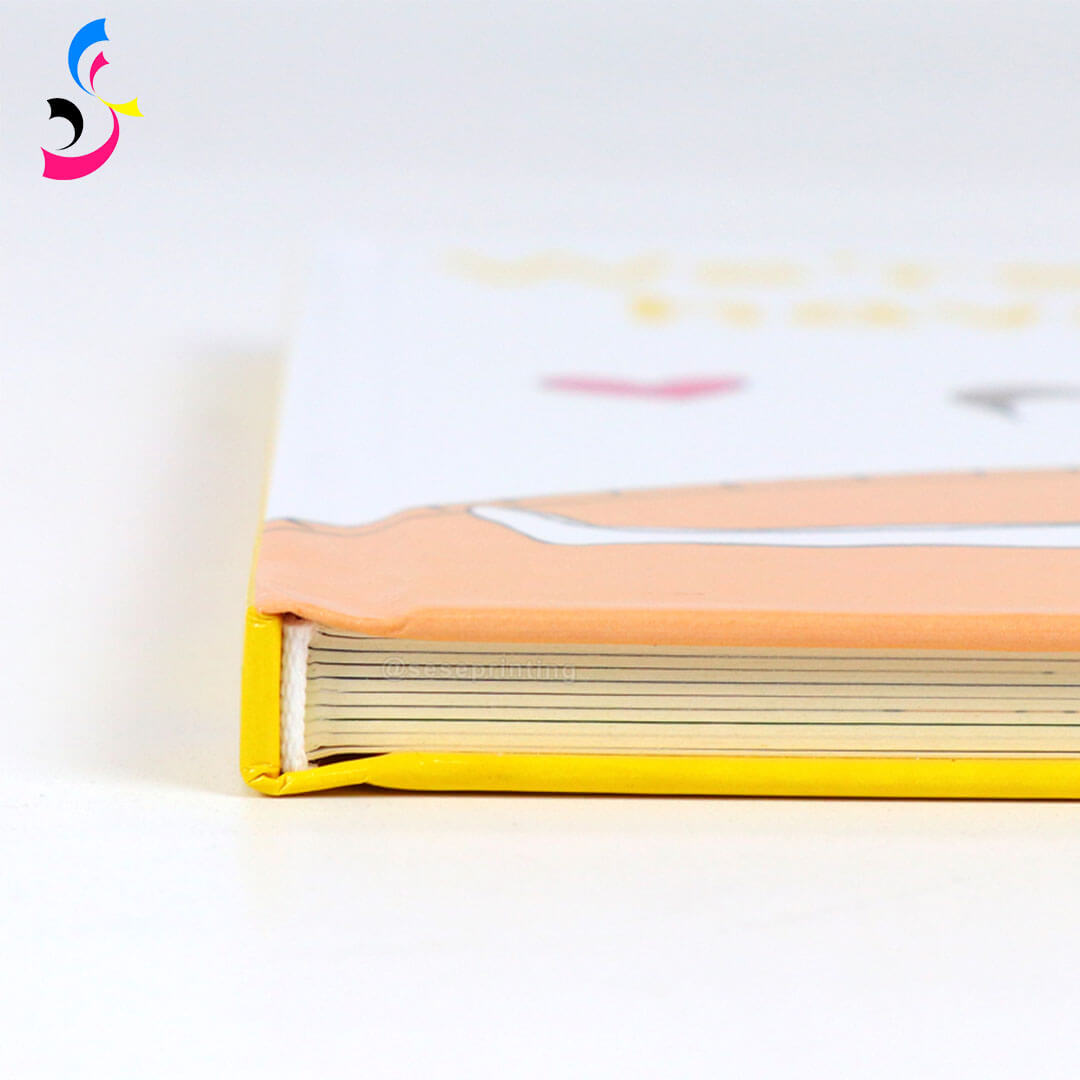
4.4 Board Book Construction
Board books require a specialized construction process using thick board pages and suitable printed surfaces. The pages are assembled to create a rigid structure designed for the intended age group and application.
5. Customize the Cover and Finishing Options
Cover design and finishing influence the appearance, tactile experience, and market positioning of a children's book. With custom printing, authors and publishers can select finishes that complement the illustrations and intended audience.
5.1 Cover Lamination and Surface Finishes
Common cover finishes include:
- Gloss lamination: Adds a glossy surface and can enhance the appearance of colorful illustrations.
- Matte lamination: Provides a more subdued, low-glare appearance.
- Soft-touch lamination: Creates a smooth, velvety surface.
- Varnishing: Provides a protective or decorative surface treatment, depending on the type selected.
- Spot UV: Adds localized gloss to selected elements, such as a title or illustration.
The best finish depends on the cover material, visual design, handling requirements, and budget.
5.2 Foil Stamping and Embossing
Special finishing techniques can add visual emphasis to titles, logos, and selected illustrations.
Foil stamping applies metallic or other specialty foil to designated areas. Gold and silver foil are common choices for premium editions, while other colors may be available depending on the production requirements.
Embossing raises selected areas of the cover, while debossing presses them into the material. These techniques can create texture and visual depth.
For children's books, decorative finishes should complement the illustrations without compromising readability or overwhelming the overall design.
5.3 Hardcover Customization Options
Hardcover children's books offer several additional customization possibilities:
- Printed hardcover cases.
- Hardcover books with dust jackets.
- Custom printed endpapers.
- Colored or specialty endpapers.
- Cloth or textured cover materials.
- Ribbon bookmarks.
- Custom slipcases or book boxes.
These options can help create gift editions, collector editions, educational book sets, and premium illustrated publications.
5.4 Special Shapes and Interactive Features
Die-cut Windows
Interactive Elements
Lift the Flap Elements
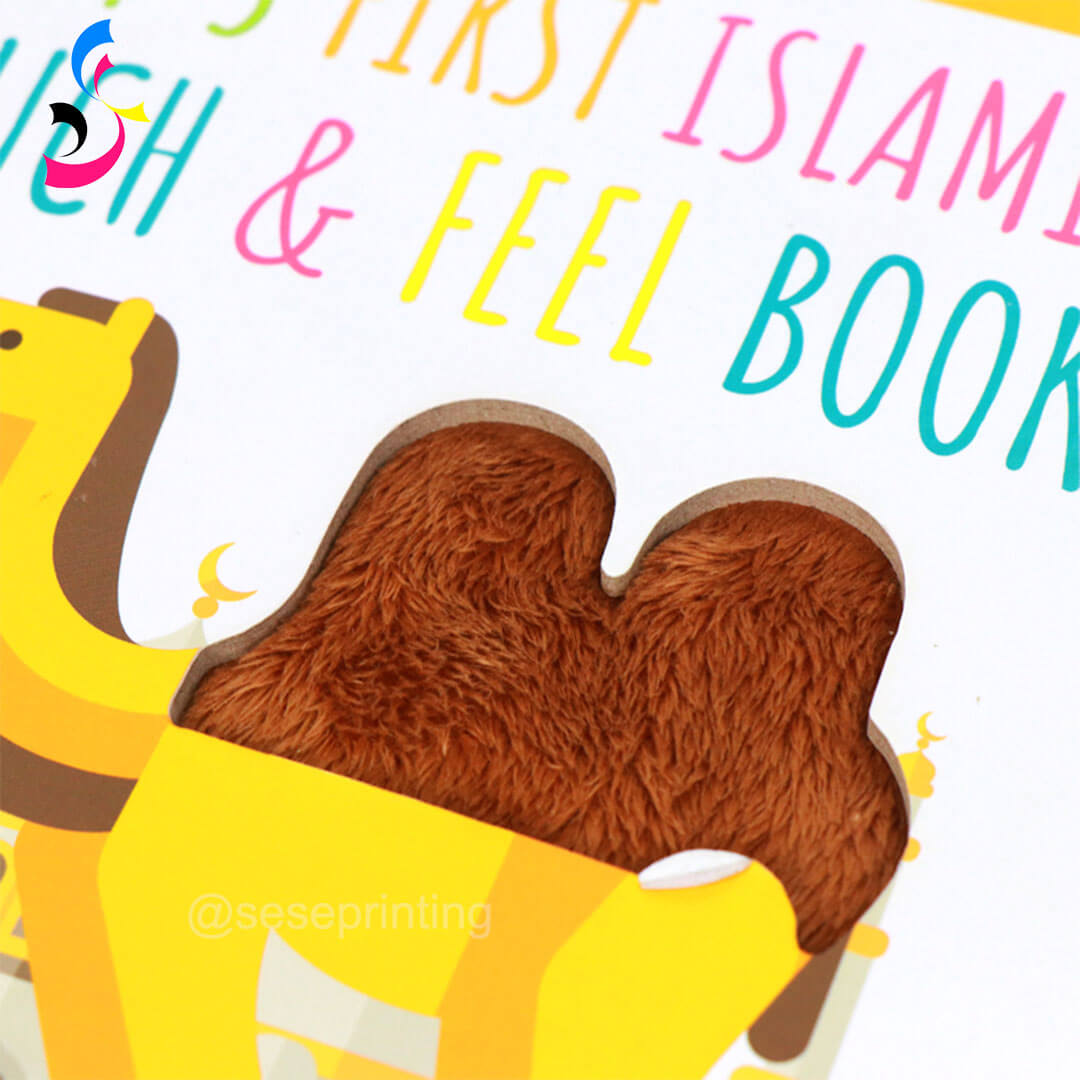
Touch and Feel Elements
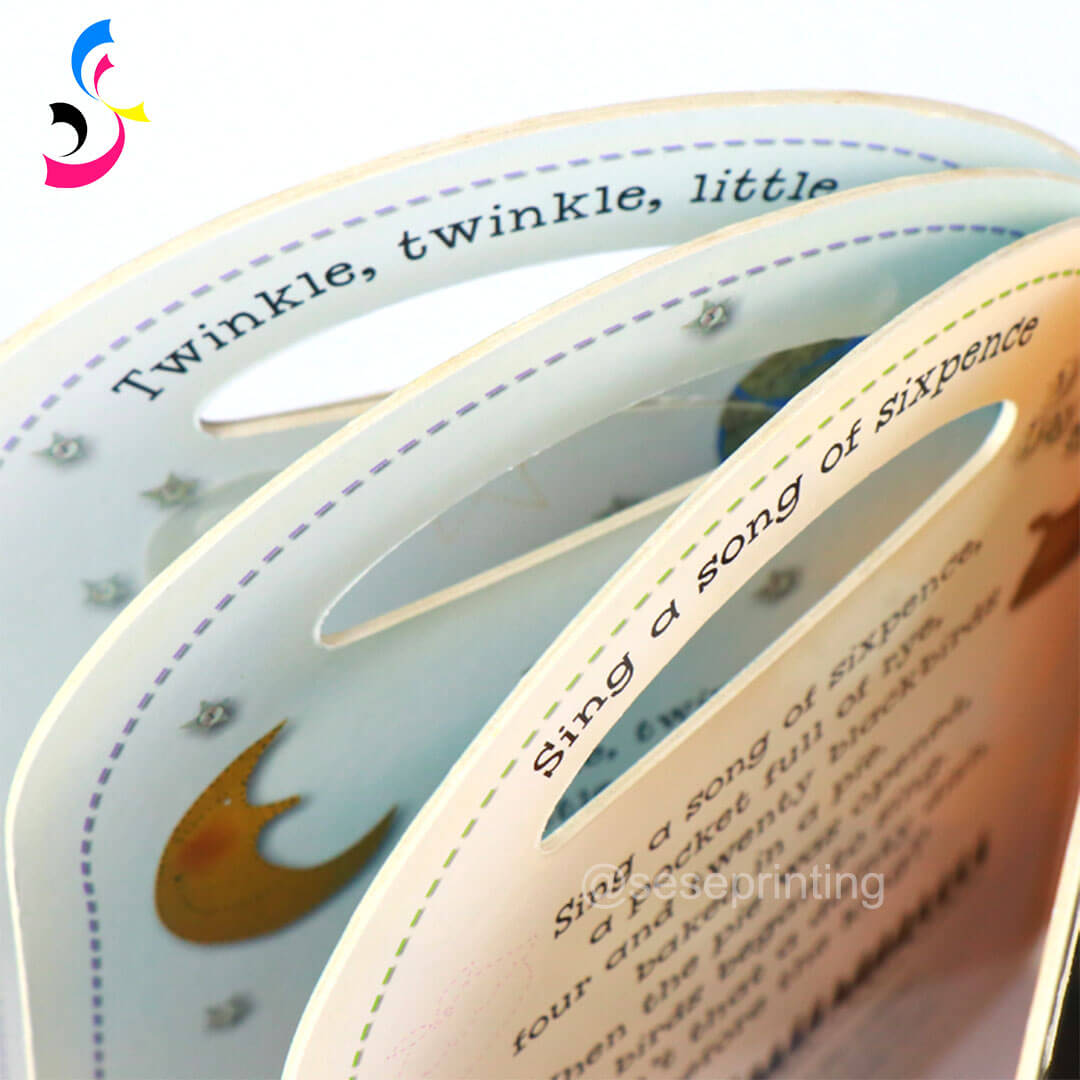
Custom shapes, die-cut windows, foldout pages, and interactive elements can help differentiate a children's book.
However, special structures often require additional tooling, assembly, and quality checks. They can also affect the book's production cost and schedule.
For products intended for young children, all structural elements and decorative components should be evaluated for age appropriateness and applicable safety requirements.
6. The Children's Book Printing Process
Understanding the production process helps authors and publishers plan their projects, prepare the necessary files, and communicate clearly with their printing manufacturer.
01 Submit Your Printing Requirements
Provide the book format, finished size, page count, quantity, paper preferences, binding method, cover finishes, packaging requirements, and delivery destination.
02 Confirm Specifications and Pricing
Review the quotation and confirm all production details, including paper, printing colors, binding, finishing, quantity, packaging, and shipping arrangements.
03 Submit Artwork Files
Supply the final cover and interior artwork. The manufacturer checks file specifications and identifies potential production issues, such as incorrect dimensions, missing bleed, or unsuitable image resolution.
04 Review and Approve the Proof
Review the proof to verify page sequence, text placement, image quality, cover details, and other critical specifications. Confirm color expectations through the agreed proofing method.
05 Printing, Binding, and Finishing
The approved files move into production. Interior pages and covers are printed, followed by the selected binding method and any additional finishing processes.
06 Quality Inspection
Finished books are inspected according to the agreed quality requirements. Checks may include print quality, page sequence, binding strength, trimming, cover finishing, and overall appearance.
07 Packaging and Shipment
The finished books are packed according to the agreed requirements and prepared for shipment. Packaging methods and shipping arrangements depend on the product, order quantity, and destination.
7. Quality Control and Safety Considerations for Children's Books
Quality control is an important part of children's book production. A visually attractive book must also meet the agreed specifications for printing, binding, construction, and intended use.
For books designed for babies and young children, material selection and product safety deserve additional attention.
7.1 Printing Quality
Printing inspections may cover:
- Color consistency between pages and copies.
- Image sharpness and illustration details.
- Text clarity and legibility.
- Correct page sequence and pagination.
- Registration accuracy and trimming.
- Cover appearance and finishing quality.
Color expectations should be agreed upon before mass production, particularly for books that rely on specific illustration colors or branded artwork.
7.2 Binding Strength and Structural Quality
Binding and assembly should be checked according to the book's format.
For perfect-bound books, inspect spine adhesion, page attachment, and trimming. For hardcover books, check cover attachment, spine construction, and the alignment of the book block. For board books, inspect page assembly, edge finishing, and the overall integrity of the structure.
Interactive books may require additional checks for flaps, foldouts, die-cut areas, and assembled components.
7.3 Materials and Product Safety
Children's products may be subject to different regulatory requirements depending on the destination market, target age group, and product construction.
Before production, clarify:
- Applicable material and chemical requirements.
- Relevant ink, coating, and substrate specifications.
- Restrictions that may apply to small parts or detachable components.
- Requirements for rounded corners or other structural features.
- Testing, documentation, and labeling obligations where applicable.
For books intended for babies and toddlers, publishers should evaluate the complete product, including its construction and any attached or detachable components, rather than considering printing materials alone.
7.4 Packaging and Transportation
Packaging should protect the books against damage during storage and shipment.
Depending on the project, suitable options may include protective wrapping, inner cartons, corrugated shipping cartons, and customized packaging.
For international shipments, consider moisture exposure, handling, stacking, transportation distance, and the protection required by the finished book format.
8. Common Mistakes to Avoid When Printing a Children's Book
Avoiding common production mistakes can reduce unnecessary costs, minimize delays, and improve the quality of the finished books.
8.1 Choosing Paper Based on Price Alone
The cheapest paper may not be the best choice for a highly illustrated picture book or a publication intended for frequent use.
Consider print quality, opacity, thickness, handling characteristics, and compatibility with the selected binding method before confirming the paper specification.
8.2 Using Low-Resolution Artwork
Low-resolution images can appear blurry or pixelated in print, particularly when illustrations contain fine lines or small details.
Prepare artwork according to the manufacturer's file requirements and review image quality at an appropriate scale before production.
8.3 Forgetting Bleed and Safe Margins
Artwork extending to the edge of a page usually requires bleed. Important text and illustrations should remain within the recommended safe area.
Incorrect file dimensions or missing bleed may result in unwanted white edges or trimming problems.
8.4 Selecting an Unsuitable Binding Method
A binding method that works well for a thin paperback may not be suitable for a thick illustrated book, board book, or interactive publication.
Confirm the book structure, page count, paper thickness, and intended opening behavior before finalizing the binding method.
8.5 Overlooking Finishing Costs
Foil stamping, embossing, spot UV, die-cutting, custom materials, and interactive features can increase production costs.
Decide which features are essential and which are optional. This helps maintain the desired visual quality while keeping the project within budget.
8.6 Skipping Proof Approval
Mass production based on unverified files can result in incorrect page sequences, text errors, unexpected color differences, or cover alignment problems.
Review the proof carefully and confirm the agreed specifications before authorizing production.
8.7 Ignoring Packaging and Shipping Requirements
Books can be damaged during transportation if the packaging is not suitable for their size, weight, or construction.
Discuss carton specifications, protective materials, shipping methods, and destination requirements before production is completed.
8.8 Failing to Confirm Safety Requirements
For books intended for young children, overlooking relevant product requirements can create compliance problems.
Identify the destination market and intended age group early, then confirm the applicable material, structural, testing, and documentation requirements.
9. How to Choose a Reliable Children's Book Printing Manufacturer
Choosing the right children's book printing manufacturer is essential for achieving consistent quality, controlling production costs, and ensuring reliable delivery. Before placing an order, consider the following factors:
- Printing Experience: Choose a manufacturer experienced in producing children's hardcover books, paperback storybooks, board books, and illustrated publications.
- Material and Binding Options: Check the availability of suitable paper, board materials, binding methods, and cover finishes.
- Quality Control: Ask about artwork file checks, proof approval, printing quality, binding strength, and finished book inspections.
- Customization Capabilities: Confirm whether the manufacturer can meet your requirements for book sizes, full-color printing, lamination, foil stamping, embossing, and other finishing options.
- Production and Delivery: Evaluate production capacity, communication, packaging options, and international shipping arrangements.
- Transparent Quotation: Provide complete specifications, including size, page count, paper, binding, quantity, and finishing requirements, to obtain an accurate quote.
Why Choose SESE Printing?
With over 31 years of printing experience, SESE Printing provides custom book printing and manufacturing solutions for authors, publishers, educational content providers, and brands. Our services cover a range of book formats, printing specifications, binding methods, and finishing options.
We support customers throughout specification confirmation, artwork file checks, proof approval, printing, binding, quality inspection, and packaging. Customers provide their own print-ready artwork, while our team helps coordinate production according to the agreed requirements.
Whether you need hardcover picture books, paperback storybooks, or custom children's books, SESE Printing can help you evaluate suitable production options based on your project specifications and budget.
10. Conclusion
Printing a children's book requires careful planning, from choosing the right format and paper materials to selecting the printing method, binding structure, and finishing options. Each decision affects the appearance, durability, production cost, and overall suitability of the finished book.
For authors and publishers, the key is to match the production specifications to the target age group, content, intended use, budget, and order quantity. Preparing print-ready artwork, approving proofs, confirming quality requirements, and planning packaging and shipping in advance can help reduce production risks.
Choosing an experienced children's book printing manufacturer is equally important. A reliable partner can help you evaluate available materials and production options, coordinate the manufacturing process, and maintain consistent quality across the order.
At SESE Printing, we support custom book printing projects with a range of book formats, material options, binding methods, and finishing solutions. From hardcover picture books and paperback storybooks to board books and specially finished editions, we work with customers to turn their prepared artwork and specifications into finished printed books.
Planning your next children's book project? Contact SESE Printing to discuss your requirements, compare suitable production options, and request a customized quotation for your children's book printing project.
 Questions to Ask a Book Printing Company Before Ordering
 You May Also Like


 Tel
 Email
 Address
702 No. 21 Huizhong Road, Shiqiao St, Panyu District. Guangzhou city, Guangdong Province. China

Joy
 Whatsapp