



 Home
Questions to Ask a Book Printing Company Before Ordering
 Oct 16,2026

 SESE
Questions to Ask a Book Printing Company Before Ordering
Choosing the right book printing company is an important step in bringing your book project to life. Whether you are an independent author preparing a novel, a publisher producing a new title, or a brand creating premium collector's editions, the quality of your printing partner can directly affect the final product, production costs, and delivery schedule.
Custom book printing involves more than transferring text and images onto paper. You may need to select the right book size, paper stock, binding method, cover finish, and packaging. For special edition books, additional features such as foil stamping, embossed covers, printed endpapers, sprayed edges, dust jackets, and custom book boxes can make your project more distinctive.
Before placing an order, asking the right questions helps you understand a printing company's capabilities, confirm whether its services match your requirements, and avoid unexpected costs or production issues.
In this guide, we cover the key questions to ask a book printing company before ordering, from customization options and artwork preparation to pricing, quality control, and international shipping. Use these questions to evaluate potential suppliers and find a reliable partner for your custom book printing project.
1. Questions About Custom Book Printing Capabilities
Not every printing company specializes in the same types of books or finishing techniques. Before discussing prices, confirm that the manufacturer can produce the type of book you need and accommodate your customization requirements.
1.1 What Types of Books Can You Print?
Start by asking about the company's main product categories and manufacturing experience. Different book formats require different materials, binding techniques, and production processes.
Depending on your project, you may need:
- Hardcover books: Suitable for novels, premium publications, coffee table books, and collector's editions.
- Paperback and softcover books: Practical options for novels, educational materials, workbooks, and other publications.
- Children's books and board books: Designed for young readers, with material and construction requirements appropriate to the intended use.
- Special edition books: Premium publications featuring decorative finishes, custom endpapers, sprayed edges, and other distinctive details.
- Journals and notebooks: Customizable products with different paper stocks, cover materials, binding methods, and finishing options.
- Photo books and art books: Publications that often require careful color reproduction and paper selection.
Ask whether the manufacturer has experience with your specific book format, especially if your project involves unusual dimensions, complex binding, or multiple finishing techniques.
1.2 What Customization Options Are Available?
One of the most important questions is whether the printing company can accommodate your preferred specifications instead of limiting you to standard configurations.
A professional custom book printing manufacturer should be able to discuss customization across several areas.
Customization category Options to consider
- Book size and format Custom dimensions, portrait, landscape, and square formats
- Binding Hardcover, paperback, perfect binding, sewn binding, and spiral binding
- Interior printing Black-and-white printing, full-color pages, mixed-color interiors, and black pages with white text
- Paper selection Different paper weights, coated or uncoated paper, and various paper colors
- Cover finishes Matte or gloss lamination, soft-touch lamination, foil stamping, embossing, debossing, and spot UV
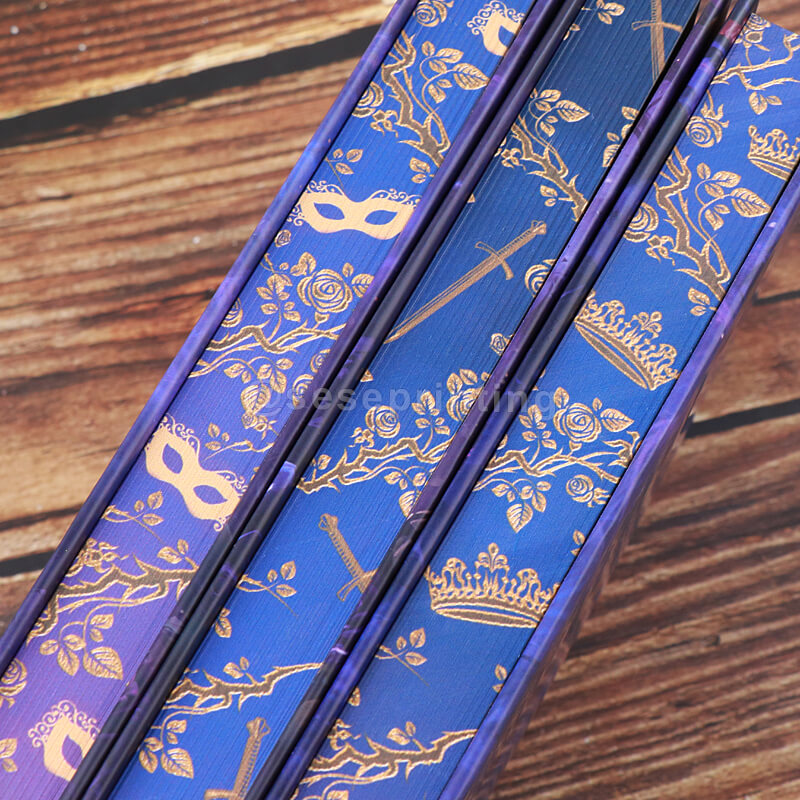
- Special edition features Sprayed edges, patterned edges, metallic edges, printed endpapers, and ribbon bookmarks
- Additional components Dust jackets, slipcases, custom book boxes, and protective mailer boxes
The right combination depends on your book's content, target audience, budget, and intended retail positioning.
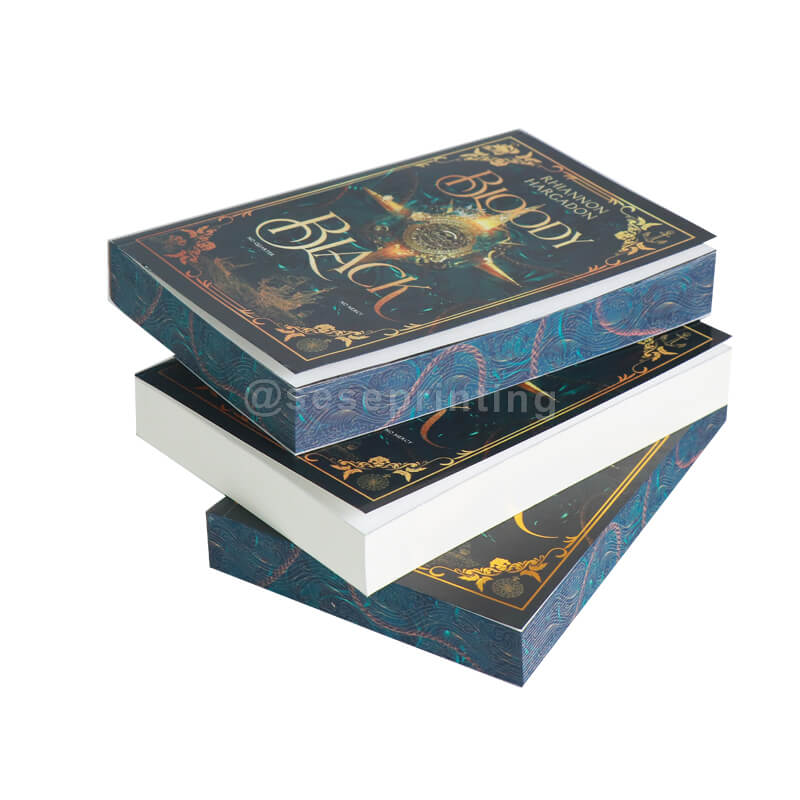
For example, a fantasy novel might combine a foil-stamped hardcover, patterned sprayed edges, illustrated endpapers, and a ribbon bookmark. A children's board book may require a different approach, focusing on board thickness, durable construction, rounded corners, and vibrant full-color printing.
1.3 Can You Combine Multiple Printing Finishes in One Book?
If you are producing a premium or limited-edition publication, ask whether the manufacturer can combine multiple finishing techniques within a single project.
Common combinations include:
- Foil stamping with embossing or debossing on the cover.
- Holographic foil with matte lamination.
- Sprayed edges with custom printed patterns.
- Printed endpapers with a ribbon bookmark.
- A dust jacket combined with a decorated hardcover case.
- A hardcover book packaged in a custom slipcase or rigid book box.
These combinations can create a more distinctive product and help establish a consistent visual identity across a book series.
However, not every combination is suitable for every material or production process. Ask the manufacturer to confirm technical feasibility, additional costs, and any requirements for separate finishing artwork before finalizing your specifications.
2. Questions About Printing Specifications and Artwork
Clear specifications and properly prepared artwork are essential for accurate printing. Confirming these details before production can help reduce file revisions, avoid misunderstandings, and ensure that the finished books meet your expectations.
2.1 What Specifications Do You Need to Prepare a Quote?
Before requesting a quotation, ask the printing company which details it needs to calculate the production cost accurately.
Most custom book printing projects require the following information:
- Finished book size: Width, height, and any special dimensions.
- Page count: Total interior pages, including any blank pages where applicable.
- Binding type: Hardcover, paperback, sewn binding, or another option.
- Interior printing: Black-and-white, full color, or a combination of both.
- Paper specifications: Paper type, weight, color, and finish.
- Cover specifications: Cover material, printing method, and surface finishing.
- Special features: Sprayed edges, foil stamping, printed endpapers, dust jackets, ribbons, and other additions.
- Order quantity: The number of copies required.
- Packaging requirements: Individual protection, book boxes, slipcases, or other packaging.
- Shipping destination: The delivery country and location.
The more complete your specifications are, the easier it is for the supplier to provide a relevant quotation.
If you have not finalized every detail, you can still contact the manufacturer with your current requirements and ask which decisions need to be made before production.
2.2 What Artwork Files Do You Require?
Ask what file formats and technical specifications the printer accepts for the cover and interior pages.
Important considerations include:
- Document dimensions and bleed settings.
- Image resolution and image quality.
- Color mode and color profile.
- Font embedding or font outlining.
- Page order and file organization.
- Spine width and cover layout.
- Separate artwork for foil stamping, embossing, spot UV, or other special finishes.
For a hardcover book, the cover file may need to account for the front cover, back cover, spine, and additional material required for wrapping around the boards. The exact template depends on the book's dimensions, page count, materials, and binding construction.
If your project includes custom sprayed edges or multiple finishing effects, ask whether separate artwork files or masks are required.
A printing manufacturer may provide cover and interior templates and check submitted files for production suitability. However, customers should confirm whether original book design, illustration, typesetting, and other creative services are included or need to be arranged separately.
2.3 Can I Customize the Paper, Colors, and Materials?
Paper and material selection can influence a book's appearance, readability, durability, and overall cost.
Before placing an order, discuss the available options with your supplier.
For interior pages, consider paper weight, opacity, texture, and color. Black-and-white novels may use different paper specifications from full-color art books or children's publications.
For covers, ask about coated paper, textured paper, cloth materials, and other suitable options. You should also confirm whether your selected material works with the finishing techniques you want to use.
If you are producing a special edition, discuss how the cover material, foil color, lamination, and sprayed-edge design will work together. A consistent combination of materials and finishes can make the finished book feel more cohesive and professionally produced.
3. Questions About Pricing, MOQ, and Production Time
A competitive unit price is important, but it should not be the only factor when comparing book printing companies. You should also understand the quotation structure, minimum order quantity, and expected production schedule.
3.1 What Is Included in Your Book Printing Quote?
Ask for a detailed quotation based on your confirmed specifications.
Depending on the project, the quotation may cover:
- Interior printing and binding.
- Cover printing and finishing.
- Special processes such as foil stamping, embossing, or sprayed edges.
- Dust jackets, endpapers, ribbons, and other components.
- Sample production or proofing costs.
- Packaging materials.
- Shipping charges, where included.
You should also clarify whether any additional costs may arise from artwork revisions, changes in specifications, special materials, or extra packaging requirements.
When comparing quotations, make sure each supplier is pricing the same specifications. A quote for a standard hardcover book cannot be directly compared with one that includes custom endpapers, metallic sprayed edges, and a rigid book box.
Ask about the payment schedule, quotation validity, currency, and any applicable taxes or other charges as well.
3.2 What Is Your Minimum Order Quantity (MOQ)?
For custom book printing, the MOQ may vary according to the book format, materials, printing process, finishing requirements, and production setup.
Questions worth asking include:
- What is the MOQ for my selected book format?
- Does the MOQ change if I add special finishes?
- Can I order several titles within one project?
- How does the unit price change at different quantities?
Ordering more copies may reduce the unit cost because certain setup and production expenses can be distributed across a larger quantity. However, a larger order also requires a greater initial investment and more storage space.
The best order quantity depends on your sales forecast, distribution plan, available budget, and inventory requirements.
If you are publishing a series, ask the manufacturer to evaluate the quantities and specifications for each title rather than assuming that one MOQ applies to every product.
3.3 How Long Does Production Take?
Before confirming an order, request an estimated production schedule based on your specifications and quantity.
The process may involve several stages:
1. Specification confirmation and quotation.
2. Artwork submission and file checking.
3. Proof preparation and approval.
4. Material preparation and production scheduling.
5. Printing, binding, and finishing.
6. Quality inspection and packaging.
7. Shipment and delivery.
The production time depends on factors such as order volume, material availability, binding complexity, finishing techniques, and the approval process.
Special edition books with multiple finishing steps may require more production time than standard books. If your project includes foil stamping, patterned sprayed edges, custom endpapers, and a book box, ask the supplier to confirm the schedule for the complete product.
4. Questions About Proofing and Quality Control
Proofing and quality control are essential for ensuring that your custom books match the approved specifications. This is particularly important when your project includes detailed artwork, multiple finishes, or premium materials.
4.1 Can I Approve a Proof Before Mass Production?
Ask how the manufacturer handles proofing and which approval options are available.
An electronic proof can help you review artwork placement, text, page layout, and the overall file structure before printing. However, it cannot fully reproduce the physical characteristics of the finished book.
Depending on your project, you may also want a physical sample to evaluate:
- Paper texture and thickness.
- Cover material and color appearance.
- Foil stamping and embossing effects.
- Binding quality and overall construction.
- Sprayed-edge color and pattern placement.
- The appearance of printed endpapers and other components.
If your book combines several finishing techniques, clarify which features will be represented in the proof or sample.
Before mass production begins, confirm the approval procedure and make sure the final specifications are documented. Changes made after approval may affect the production schedule and cost.
4.2 How Do You Ensure Consistent Printing Quality?
A reliable printing manufacturer should have a defined quality-control process throughout production, rather than relying exclusively on a final inspection.
Ask how the supplier checks the following areas:
- Printing quality: Text clarity, image reproduction, color consistency, and unwanted marks.
- Binding quality: Spine alignment, page attachment, trimming, and overall construction.
- Cover finishing: Foil placement, lamination quality, embossing depth, and surface appearance.
- Special edition details: Sprayed-edge coverage, pattern alignment, endpaper placement, and ribbon attachment.
- Final inspection: Page sequence, visible defects, packaging condition, and conformity with the approved specifications.
For multi-title projects or book series, consistency between copies is particularly important. Confirm how the supplier checks finished products against the approved proof and agreed production requirements.
5. Questions About Packaging, Shipping, and Communication
A successful book printing project does not end when the books come off the production line. Packaging, transportation, and communication also influence the overall customer experience.
5.1 What Packaging Options Are Available for Custom Books?
Packaging should protect the finished books while supporting your distribution and presentation requirements.
Depending on the project, available options may include:
- Individual protective packaging: Helps protect books from surface scratches and handling damage.
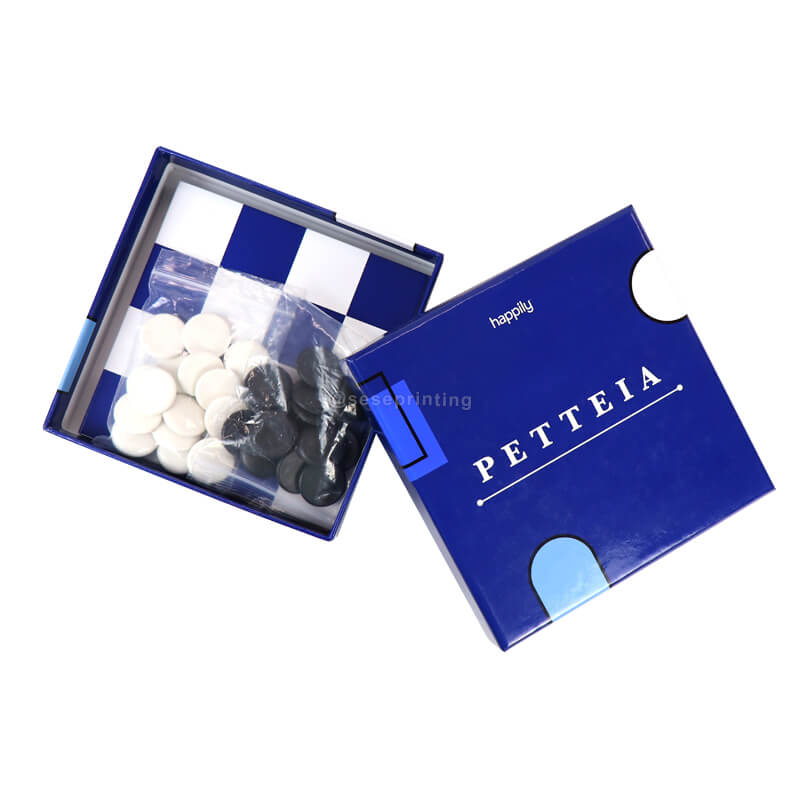
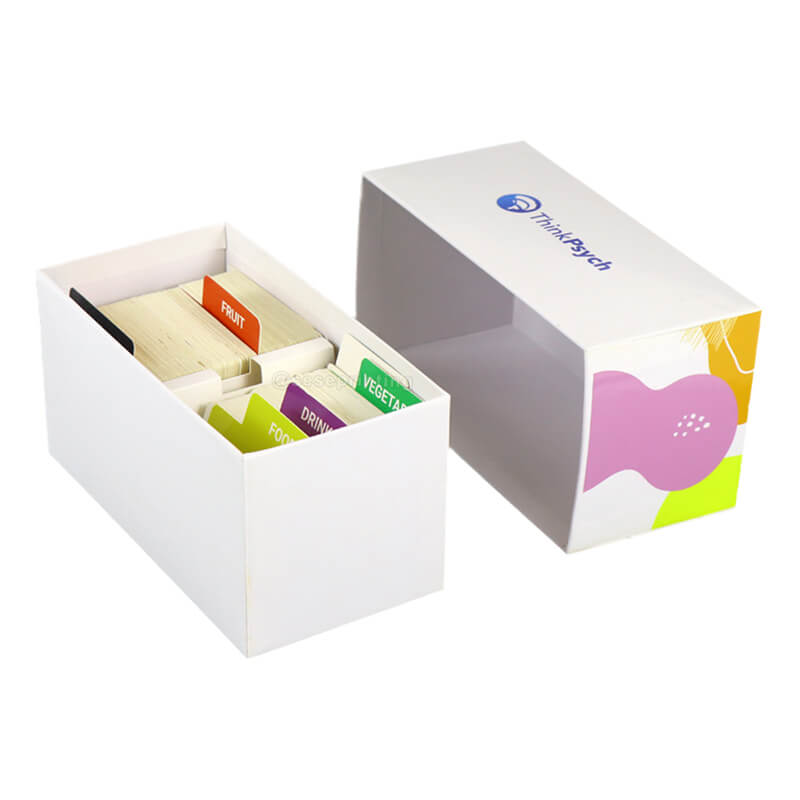
- Custom rigid book boxes: Suitable for premium editions, collector's editions, and gift-oriented publications.
- Slipcases: Provide an additional protective and presentation layer for individual books or multi-book sets.
- Custom mailer boxes: Designed for shipping books directly to customers or distribution centers.
- Set packaging: Helps keep multiple titles together and supports a consistent presentation for book series.
When discussing packaging, consider the book's dimensions, quantity, surface finishes, and shipping method. Books with delicate covers or decorative sprayed edges may need additional protection during transportation.
If you are shipping to multiple destinations, ask whether the packaging can accommodate your distribution requirements and whether additional labeling or packing arrangements are available.
5.2 Do You Offer International Shipping?
If your printing manufacturer is located overseas, clarify how the shipping process works before confirming the order.
Questions to ask include:
- Which shipping methods are available?
- Can you provide an estimated shipping cost and transit time?
- Which delivery terms can you support?
- Who handles export documentation and customs-related requirements?
- Are duties and import taxes included or paid separately?
- How will the books be packed to reduce the risk of damage during transit?
The answers may vary depending on the destination, shipment size, carrier, and agreed delivery terms.
For publishers and brands working with launch dates, retail deadlines, or crowdfunding campaigns, it is particularly important to plan for both manufacturing and transportation. Build an appropriate buffer into your schedule rather than relying solely on the estimated factory completion date.
5.3 How Will You Communicate Order Progress?
Clear communication helps keep the project on schedule and reduces misunderstandings.
Before ordering, ask who will handle your project and how updates will be provided during the production process.
Ideally, the supplier should communicate clearly at key stages, including:
- Quotation and specification confirmation.
- Artwork receipt and file review.
- Proof preparation and approval.
- Production scheduling and progress.
- Quality inspection and packaging.
- Shipment and tracking information.
6. Red Flags to Watch for When Choosing a Book Printing Company
Not every supplier is equally suited to every book printing project. Before committing to an order, watch for warning signs that may indicate a mismatch between your requirements and the manufacturer's capabilities.
6.1 Vague or Incomplete Quotations
A quotation that lists only a unit price without explaining the specifications, included finishes, packaging, or shipping arrangements can make supplier comparisons difficult.
Request a breakdown that clearly identifies the products and services being quoted.
6.2 Unclear Customization Capabilities
If your project requires metallic sprayed edges, foil stamping, special binding, or custom packaging, confirm that the manufacturer can produce these features.
Do not assume that a supplier offering general book printing services can accommodate every specialized finishing technique.
6.3 No Clear Proofing or Quality-Control Process
A supplier should be able to explain how artwork is approved, how production quality is checked, and what happens if the finished products do not meet the agreed requirements.
If these procedures are unclear, request more information before placing an order.
6.4 Unrealistic Production Promises
Production schedules depend on order quantity, materials, finishing processes, and production capacity.
Be cautious if a supplier promises a delivery date without reviewing the project specifications or accounting for the approval and shipping stages.
Ask for a realistic schedule with clearly defined milestones.
6.5 Poor Communication
Delayed responses, inconsistent information, or a reluctance to confirm specifications in writing can create problems throughout the project.
A suitable printing partner should communicate clearly, answer technical questions, and document the requirements before production begins.
6.6 A Low Price Without Clear Specifications
The cheapest quotation may not offer the best overall value if it excludes important finishing details, uses different materials, or leaves packaging and shipping costs unresolved.
Compare suppliers based on equivalent specifications, product quality, service scope, and delivery arrangements—not unit price alone.
7. Checklist: What to Prepare Before Contacting a Book Printing Company
Preparing your project information in advance can help a printing manufacturer understand your requirements and provide a more accurate quotation.
Use the following checklist before submitting an inquiry.
Item Information to prepare
- Book specifications Finished size, page count, binding type, and number of titles
- Interior printing Black-and-white or full-color printing, paper type, paper weight, and paper color
- Cover specifications Cover material, printing method, lamination, and other finishes
- Special edition features Foil stamping, embossing, sprayed edges, printed endpapers, dust jackets, and ribbon bookmarks
- Artwork files Cover and interior artwork, plus separate finishing artwork if required
- Order quantity Required copies per title and estimated future demand
- Budget Target unit price or overall project budget, if available
- Packaging Individual protection, custom book boxes, slipcases, or mailer boxes
- Delivery requirements Shipping destination, preferred delivery schedule, and any special handling needs
You do not need to finalize every detail before contacting a manufacturer. However, providing as much information as possible will make it easier to identify suitable production options and understand the potential cost.
If you are uncertain about paper selection, binding methods, or finishing combinations, list your priorities and ask the manufacturer to explain the available alternatives.
For example, you might prioritize a durable hardcover, a distinctive cover finish, and patterned sprayed edges while remaining flexible about the paper stock. This gives the supplier a clear starting point for discussing feasible customization options.
8. Conclusion
Choosing the right book printing company involves more than comparing prices. You need to evaluate its customization capabilities, technical expertise, quality-control procedures, production schedule, and ability to deliver books that meet your specifications.
Whether you are producing a paperback novel, a hardcover publication, a children's book, or a premium special edition, asking these questions before ordering can help you make informed decisions and establish a smoother production process.
SESE Printing provides custom printing solutions for publishers, independent authors, brands, and content creators. With more than 30 years of printing experience, we support a range of book printing projects, from standard hardcover and paperback books to special editions featuring foil stamping, embossing, printed endpapers, decorative sprayed edges, dust jackets, ribbon bookmarks, and custom book boxes.
Our one-stop printing and production services support customization across book formats, paper selections, binding methods, finishing techniques, and packaging options. By discussing your specifications and production requirements with our team, you can explore suitable solutions for your project.
Whether you are preparing a new book release, developing a collector's edition, or producing a coordinated book series, we are ready to discuss your printing requirements.
Ready to start your next book printing project?
Contact SESE Printing with your book specifications, artwork files, order quantity, and preferred finishing options to request a customized quotation.
 Book Box Packaging Ideas for Special Edition Books
 You May Also Like


 Tel
 Email
 Address
702 No. 21 Huizhong Road, Shiqiao St, Panyu District. Guangzhou city, Guangdong Province. China

Joy
 Whatsapp